01
Glass vs plastic containers
Both keep pests out. They differ on odor, weight and what happens when one comes off a top shelf.
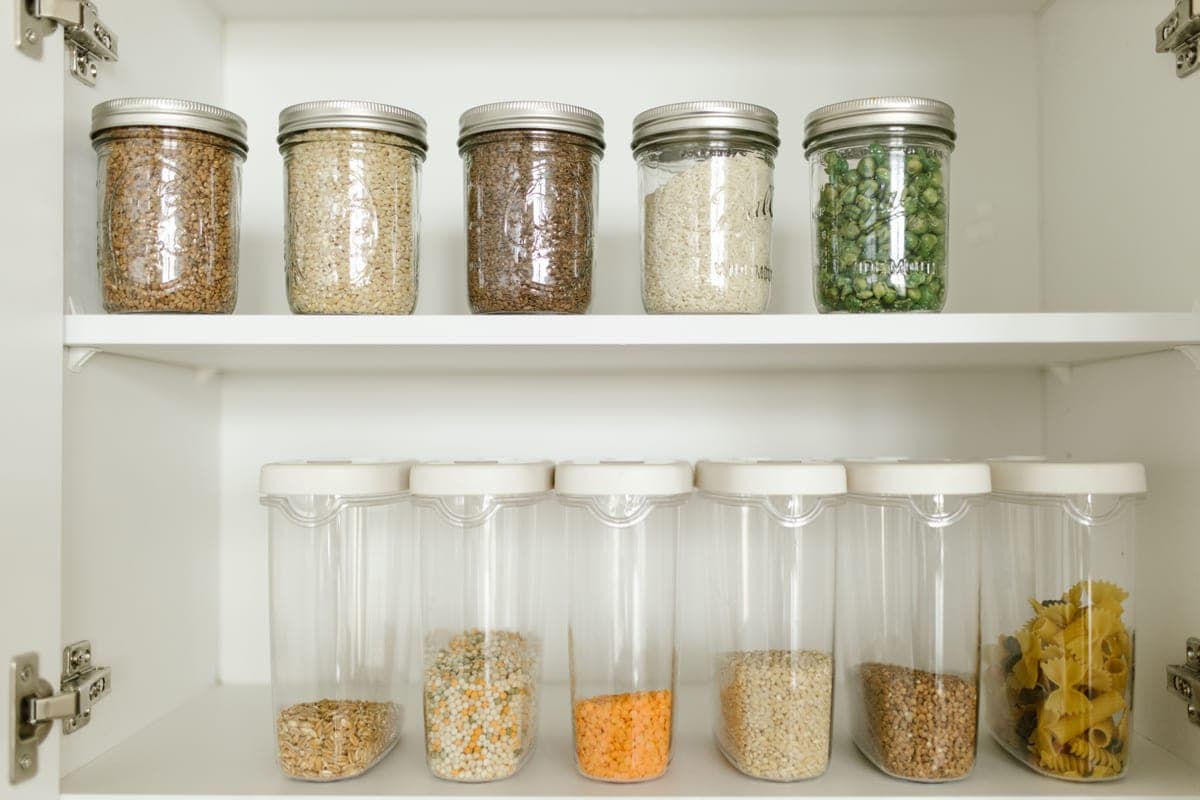
Use glass low and plastic high. Glass is non-porous, so it never takes on the color of turmeric or the smell of bacon fat, and it never clouds. Plastic is a fraction of the weight, which matters a great deal above shoulder height, where a full glass jar coming down is a genuine hazard. Both defeat pantry moth larvae equally, since neither can be chewed through.
Most glass-versus-plastic content treats this as a values question. It is a shelf-height question with an odor question attached.
The differences that are real
| Attribute | Glass | Plastic |
|---|---|---|
| Absorbs odor and color | No — non-porous | Yes, over time, especially with oils and strong spices |
| Clouds or scratches | No | Yes, with dishwasher cycles and scouring |
| Weight when full | Heavy | Light |
| Breaks | Yes | No, it cracks at worst |
| Safe above shoulder height | No | Yes |
| Stops pantry moth larvae | Yes | Yes — larvae cannot chew rigid plastic either |
| Microwave | Usually yes | Depends on the plastic |
| Freezer | Only if the product is rated for it | Usually yes |
| Cost per liter | Higher | Lower |
The odor row is the one that decides most real cases, and it decides them by food type rather than by preference.
Decide by food, then by shelf
- Glass for: oils, anything with turmeric or paprika, dried chilli, coffee, strongly aromatic teas, anything you have previously stained a container with.
- Plastic for: flour, sugar, rice, pasta, cereal — bulk staples that are neither oily nor strongly colored, and which live in large heavy quantities.
- Then apply the shelf rule. Whatever the food says, glass does not go above shoulder height. If your turmeric lives on the top shelf, either move the turmeric or accept a stained plastic container.
The weight arithmetic
A large glass canister full of flour is a substantial weight to lift down at arm's length above your head, and if you drop it you are dealing with broken glass in food on a hard floor. That is not a theoretical objection; it is the single most practical reason plastic exists in this category.
It also matters structurally. A shelf full of glass canisters is a meaningfully heavier load than the same shelf in plastic, which is worth knowing if the shelf is wall-mounted rather than a freestanding rack — the published load figures and their conditions are on shelf span and weight.
Clarity over time
Glass stays clear indefinitely. Plastic clouds, and how fast depends on the polymer and how you wash it. Repeated hot dishwasher cycles and any abrasive cleaning accelerate it, and a clouded container defeats the visibility that made you buy a clear one.
If you are buying plastic and expect to keep it for years, that is the argument for the more expensive clarity-focused ranges over the commodity sets. It is a real difference and it shows up at about the two-year mark rather than immediately.
One range lets you choose either material without changing lid systems, which is unusual enough to be worth knowing before you commit - it is set out on the Rubbermaid Brilliance review. Whichever you pick, the lids need somewhere to stand on edge: best container lid organizers.
FAQ
Questions people ask about this
Is glass or plastic better for food storage?
Glass for anything oily or strongly colored, because it is non-porous and never stains or holds a smell. Plastic for bulk staples and for anything stored above shoulder height, because a full glass jar coming off a high shelf is a genuine hazard.
Do plastic containers absorb smells?
Yes, over time, particularly with oils and strong spices. Glass does not, because it is non-porous. If a container has ever held turmeric or curry paste, that is the case for glass.
Does glass keep food fresher than plastic?
Not by itself. Freshness is about the seal, not the body material — a glass jar with a friction lid seals worse than a plastic container with a compressed silicone gasket. Judge the lid mechanism.
Can pantry moths get through plastic containers?
Not rigid ones. Larvae chew through thin cardboard and plastic bags but cannot get through hard plastic, glass or metal. On pest protection, rigid plastic and glass are equivalent.
Why do plastic containers go cloudy?
Repeated hot dishwasher cycles and abrasive cleaning etch the surface. It is gradual and typically noticeable around the two-year mark. A clouded container defeats the visibility you bought a clear one for, which is the argument for the better clarity-focused ranges if you keep containers a long time.
Sources
Where these figures come from
- University of Maryland Extension, Indian Meal MothLife cycle, egg count and the packaging materials larvae can and cannot penetrate.
- OXO, POP container product pagesPublished exterior dimensions and capacity for every container size.
- What is not a source hereWe have not handled these products. Nothing on this page is a test result, and no figure comes from a retailer listing, another publisher, or memory.