A rod is a span problem. Get the diameter, the material and the support spacing right and the sag question never comes up.
By Scooter M.Published September 1, 2026Content updated September 1, 2026Prices shown live on AmazonHow we pick
Bin & Basket earns a commission when you buy through our links, at no extra cost to you. We are an Amazon Associate. We accept no free products, no sponsored placements and no paid inclusion, and commission rate plays no part in what we recommend. Full disclosure.
The strongest closet rod is steel tube in the standard 1-5/16 inch diameter, supported at least every 36 inches. Material and diameter matter, but span matters more: ClosetMaid specifies one rod support every 36 inches of hang rod plus one at each end, and a six-foot rod supported only at its ends has a 72 inch unsupported span, which is double that. That is why closet rods sag, not because the rod was cheap.
Before you replace anything, measure the existing rod's diameter. 1-5/16 inch is the standard US closet rod size and fits standard sockets, but 1 inch and 1-1/4 inch sockets exist and a rod that does not fit them is a wasted order.
#
Product
Best for
Score
Price
01
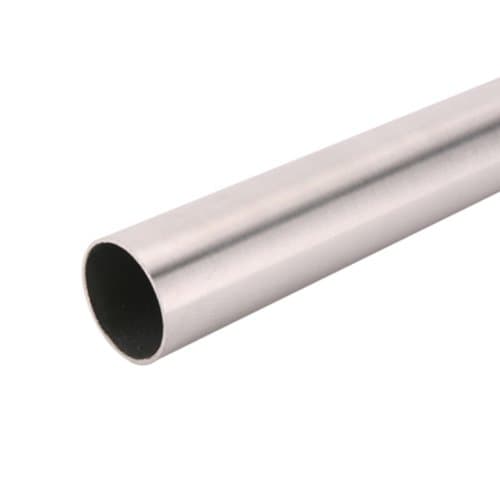
Knape & Vogt Heavy-Duty Steel Closet RodA plain steel rod in the standard 1-5/16 in diameter, sold in lengths you cut down — the boring answer to a bowed rod.
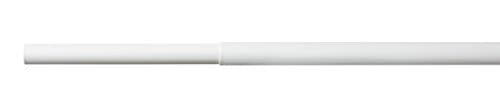
ClosetMaid SuperSlide Hang Rod and Rod SupportThe rod and support designed for SuperSlide shelving, so hangers pass the support instead of stopping at it.
No imageSongmics Heavy-Duty Spring Tension RodPressure alone holds it up, which is either exactly what a renter needs or a slow-motion accident, depending on load.
Scores are our own, from the published rubric on the methodology page. They are editorial judgments about published specifications, not test results — we have not handled these units.
01
A span that has already sagged once
Knape & Vogt Heavy-Duty Steel Closet Rod
A plain steel rod in the standard 1-5/16 in diameter, sold in lengths you cut down — the boring answer to a bowed rod.
1-5/16 in, the standard US closet rod size that fits standard sockets
Material
Steel tube, which resists deflection far better than wood at the same diameter
Support rule
Add a center support if the span exceeds about 36 in — ClosetMaid's own SuperSlide guidance is a support every 36 in of hang rodSource: ClosetMaid published product specifications
Published deflection figure
Not published by the manufacturer in a form we could verify for closet rod stock.
What it gets right
Standard diameter, so existing sockets and supports fit
Cuts to length with a hacksaw or pipe cutter
Steel outperforms a same-diameter wood dowel over a long span
What it does not
Plain steel, no finish options to speak of
You still have to buy or reuse the end sockets
Who it is for
Anyone replacing a wooden rod that has bowed, or building a run longer than about a meter.
Skip this if
Your sockets are an odd diameter. Measure the existing rod before ordering — 1-5/16 in is standard but 1 in and 1-1/4 in sockets exist.
02
Matching an existing ClosetMaid run
ClosetMaid SuperSlide Hang Rod and Rod Support
The rod and support designed for SuperSlide shelving, so hangers pass the support instead of stopping at it.
Spring tension between two opposing walls. No fixings.
Load behavior
Capacity falls sharply as span increases — tension rods are a short-span device
Published load at span
Not published by the manufacturer in a form we could verify as a load-versus-span curve by any manufacturer we found.
What it gets right
No holes at all
Installs in under a minute and moves just as fast
Genuinely useful in an alcove or a niche with no rod
What it does not
Every tension rod eventually slips; the only question is under what load
Nobody publishes a load-versus-span figure, so you are guessing
Who it is for
A short alcove, a laundry drying run, or a rental where a real rod is not permitted.
Skip this if
The span is over about four feet or the clothes are coats. This is the classic failure: a wide tension rod holding heavy winter coats comes down in the night.
The span arithmetic
Nobody publishes a deflection curve for closet rod stock, so the honest approach is to work to the manufacturer's support spacing rather than to a load number. ClosetMaid's SuperSlide guidance is the clearest figure available: one support every 36 inches of hang rod, and one at each end of the shelf and rod.
Supports needed by rod length
Rod length
Supports at each end
Mid-span supports needed
Longest unsupported span
36 in
2
0
36 in
48 in
2
1
24 in
60 in
2
1
30 in
72 in
2
1
36 in
96 in
2
2
32 in
120 in
2
3
30 in
Derived by dividing each rod length into spans of 36 in or less, per ClosetMaid's published SuperSlide rod-support spacing. Arithmetic shown so you can check it.
The same span arithmetic decides whether a freestanding rack bows, and racks run far longer unsupported spans than a fixed rod is allowed - which is why wide ones sag. That comparison is on best garment racks.
Material, honestly
Steel tube. Resists deflection far better than wood at the same diameter, and it is what every system manufacturer uses. The default answer.
Wood dowel. Looks better in an open closet and sags sooner. If you want wood over a long span, add a mid-support rather than a thicker dowel.
Chrome or vinyl-coated steel. Same structural behavior as bare steel; the coating is about hanger slide and corrosion, not strength.
Tension rods. Not a structural option. No manufacturer publishes a load-versus-span figure, and beyond about four feet they are the classic renter failure. Covered honestly in the ranking above.
What hangs on the rod is not always clothes: purse hooks fit any rod under 1.8 in thick and cost the rod almost nothing, at some cost to the handles. The comparison is on best handbag and purse organizers.
Diagnosing a rod that has already bowed
Unload it and look. Steel that has taken a permanent set does not come back. Wood sometimes partially recovers; do not rely on it.
Measure the unsupported span. If it is over 36 inches, that is your answer and a new rod alone will not fix it.
Add a mid-support before replacing the rod. It is cheaper, faster, and it is usually the actual fix.
Match the support to the shelf. On a SuperSlide run, use the SuperSlide support so hangers still pass it. A generic bracket blocks the rod, which defeats the point of the range — see ClosetMaid, line by line.
Then replace the rod if it is still bowed, in steel, at the diameter your sockets take.
FAQ
Questions people ask about this
What is the strongest closet rod?
Steel tube in the standard 1-5/16 inch diameter, supported every 36 inches. Material matters less than span: ClosetMaid specifies a support every 36 inches of hang rod plus one at each end, and most sagging rods are simply spanning further than that.
What size is a standard closet rod?
1-5/16 inches in diameter is the US standard and fits standard sockets. Measure your existing rod before ordering, because 1 inch and 1-1/4 inch sockets also exist.
How far apart should closet rod supports be?
Every 36 inches, plus one at each end of the shelf and rod, per ClosetMaid's published SuperSlide guidance. A six-foot rod supported only at its ends spans 72 inches unsupported, which is twice the recommended figure.
Is a wood or metal closet rod better?
Metal, for anything spanning distance. Steel tube resists deflection far better than a wood dowel of the same diameter. Wood looks better in an open closet, and if you want it, add a mid-span support rather than a thicker dowel.
Can you fix a sagging closet rod without replacing it?
Often, yes — add a mid-span support so no section exceeds 36 inches. If the rod has already taken a permanent set, steel will not recover and you will need both the support and a new rod.
Are tension rods strong enough for a closet?
For a short span and light garments only. No manufacturer publishes a load-versus-span figure for them, so there is no number to design to, and beyond about four feet with heavy clothing they are the most common renter storage failure.
Sources
Where these figures come from
ClosetMaid published product specificationsSuperSlide and Shelf & Rod depth options and rod-support spacing.
What is not a source hereWe have not handled these products. Nothing on this page is a test result, and no figure comes from a retailer listing, another publisher, or memory.