01
Drawers vs shelves
A drawer is a shelf you can see the back of. That single difference decides what belongs in each, and most closets get it backwards.
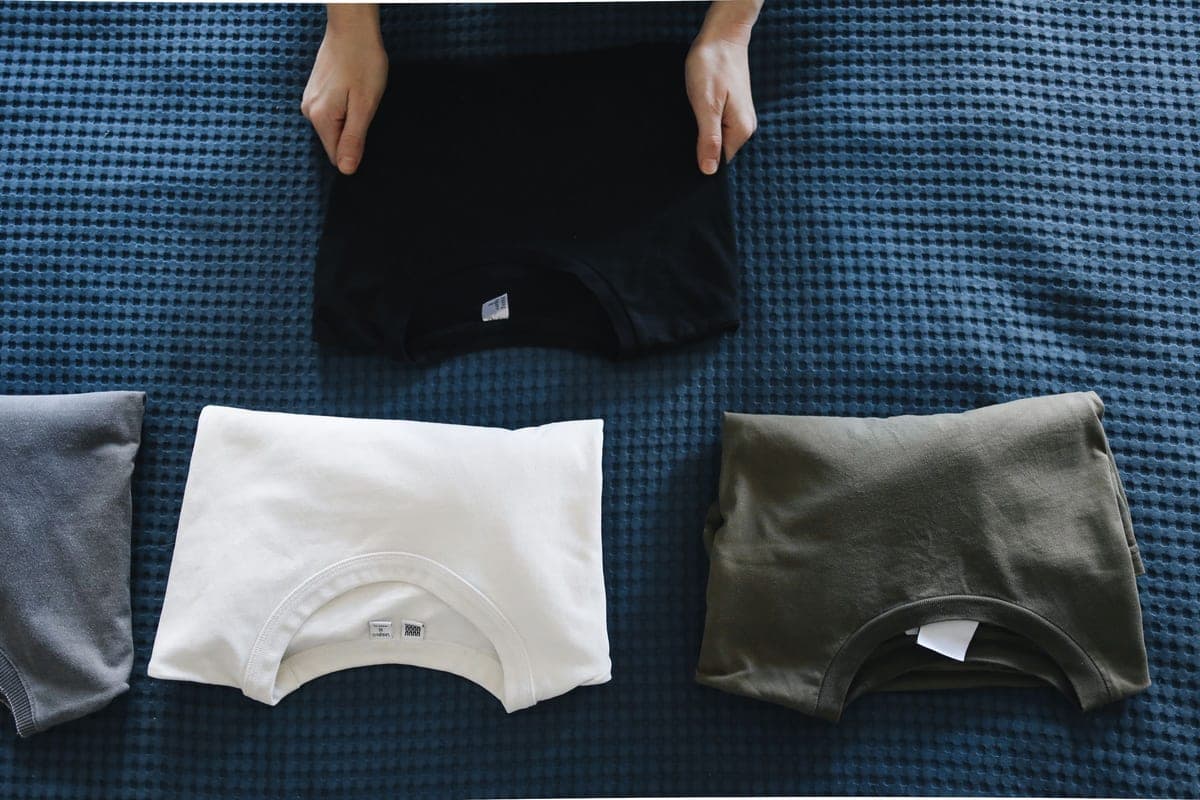
Put anything you reach for weekly in a drawer, and anything you reach for seasonally on a shelf. The reason is that a drawer comes out to you, so its whole depth is reachable, while a shelf is only as useful as the part you can see. That makes drawers the right home for small, frequent, similar items — socks, underwear, t-shirts — and shelves the right home for bulky, infrequent, visually distinct ones: sweaters, bags, boxes, luggage.
The second rule follows from stack height. A folded stack taller than about 10 inches falls over. Shelves let you stack that high and drawers do not, so anything that stacks well and is picked from the top belongs on a shelf, and anything that does not belongs in a drawer.
The comparison, attribute by attribute
| Drawer | Shelf | |
|---|---|---|
| Access to the back | Full — the drawer comes to you | Poor — you reach past the front of the stack |
| Visibility | Everything at once, from above | Only the front edge and the top item |
| Stack height | Limited by the drawer's interior depth, commonly around 7 in | Limited by the shelf gap, commonly 10 to 14 in |
| Suits | Small, similar, frequent items | Bulky, distinct, infrequent items |
| Cost per cubic foot | Higher — you are paying for the mechanism | Lower — a shelf is a board |
| Failure mode | Overfilled, so the drawer jams or the contents shuffle | Stack topples, or the back row is forgotten |
The 7 inch drawer figure is Sterilite's published interior depth for its wide cart, quoted as a representative example rather than a standard. Shelf gaps are the published residential spacing bands.
The frequency rule, and why it beats the category rule
Most closet advice sorts by category: socks here, shirts there. Sorting by frequency works better, because it matches the physical difference between the two storage types.
- Daily and weekly — drawers, at waist height. Full access, no reaching past anything.
- Monthly — shelves at eye level. Visible, one reach.
- Seasonally — the top shelf, in labeled boxes. You will look at it twice a year and you want to identify a box without opening it.
- Almost never — the top shelf at the back, or out of the closet entirely. If it has not moved in two years, the closet is the wrong place for it.
Applied to a real closet this often means splitting a category. Everyday t-shirts go in a drawer; the ones you only wear in summer go in a box on the top shelf. That feels untidy on paper and works in practice, because the closet is optimized for the reaching you actually do.
What the top shelf is for
The top shelf of a closet sits above the rod, is usually out of comfortable reach, and is the most consistently wasted space in the room. It has one good job and several bad ones.
- Good: labeled boxes of seasonal clothing. Identified from below by a label, retrieved twice a year.
- Good: luggage, which is bulky, light and used rarely — a near-perfect match for the constraints.
- Good: spare bedding, for the same reasons.
- Bad: anything heavy. You are lifting it down above shoulder height, which is the worst position to take weight in.
- Bad: anything loose. Without a box it becomes an unsorted heap you cannot see the back of, and it will stay that way.
- Bad: anything you need monthly or more. You will not go and get it, and it will migrate somewhere else anyway.
What the bottom is for
The floor of a closet, under the hanging, is the other commonly wasted band — usually holding shoes badly. Its natural job is the reverse of the top shelf: heavy things, because they are at lifting height, and frequent things, because they are easy to reach.
That makes it the right place for a drawer tower, which converts the band into exactly the frequent-access storage the rule above wants. The sizing, including the clearance you need under a hanging hem, is on best closet drawer towers.
Fixing a drawer that does not work
The usual complaint about drawers is that everything migrates into a single mixed layer. That is a symptom of two things, and both have cheap fixes.
- No divisions. A drawer without dividers has no reason for anything to stay where you put it. Dividers or trays fix this and are covered on best drawer organizers.
- Stacked rather than filed. Folding items to stand on edge, filed front to back, means you see every item from above instead of only the top one. It is the single biggest improvement available to a drawer and it costs nothing.
Filing on edge also removes the stack-height limit that makes drawers worse than shelves for bulky items — at least partly. A folded sweater on edge still takes more drawer depth than most drawers have, which is why knitwear stays on a shelf.
Filing on edge, in detail
This is the single change that makes a drawer work, and it is worth describing precisely because the usual instruction — "fold things smaller" — misses the point.
- Fold to the drawer's depth, not to a standard. The finished parcel should stand roughly as tall as the drawer's interior is deep, so it fills the height without being squashed by the drawer above.
- Stand each parcel on its edge, so it is supported by its neighbors on both sides rather than resting on the one below.
- File front to back, so removing one item leaves a gap rather than collapsing a stack.
- Leave a little slack. A drawer packed tight enough that parcels cannot be lifted out is a drawer that gets pulled apart instead.
The result is that every item is visible from above and removable without disturbing anything else, which is the property a shelf can never have. It also means the drawer's usable capacity is set by its area rather than by how high a stack will survive.
Shelf spacing for folded clothes
| Stacked item | Practical stack height | Shelf gap to allow |
|---|---|---|
| T-shirts, folded | 6 to 8 in before it leans | 9 to 10 in |
| Jeans and heavy trousers | 8 to 10 in | 11 to 12 in |
| Sweaters and knitwear | 8 to 10 in, and bulkier | 12 to 14 in |
| Handbags, upright | Item height | Item height plus about 2 in |
| Boxed seasonal storage | Box height | Box height plus about 1 in to slide it out |
These are practical stack limits rather than published figures, and the table says so. The published residential shelf spacing bands they sit inside are cited at the foot of this page.
The pattern is that a shelf gap wants to be a couple of inches more than the stack it holds — enough to get a hand in above, not so much that you have built a second dead zone. That is the same logic that governs pantry shelves, where the arithmetic is set out on pantry shelf depth and spacing.
A worked example: one ordinary closet
Take a reach-in with a rod at 66 inches, a shelf above it, and a floor currently holding shoes. Applying the frequency rule gives a specific layout rather than a principle:
- Rod — everything that hangs, which is most of what you wear weekly. Slim hangers, because rod length is the binding constraint.
- Floor, under the hanging — a drawer tower, holding socks, underwear and t-shirts filed on edge. Daily items at waist height, full access.
- Shelf above the rod — labeled boxes: seasonal clothing and luggage. Reached twice a year, identified from below.
- Shoes — off the floor, because the floor now has a better job. A rack or a hanging column, depending on whether you have rod to spare.
Nothing in that list is exotic and the whole thing can be assembled from three purchases. What makes it work is that each zone holds items matched to how often you reach for them, rather than sorted by what they are.
Where a shelf is the right answer but the stack keeps toppling, a divider fixes it without converting the shelf into a drawer - sized against the stack heights above, on best closet shelf dividers.
When the rule does not apply
Two cases break the frequency rule cleanly enough to be worth stating, because forcing them through it produces a worse closet.
- Anything that must not crease. Tailoring and formal shirts belong on a rod regardless of how often you wear them, because both drawers and shelves fold them and folding is the problem.
- Anything shared. In a closet used by two people, splitting by person beats splitting by frequency, because a system nobody can find their own things in stops being maintained within a week.
What we are not telling you
The shelf spacing bands and rod heights referenced here are published residential figures cited at the foot of this page, and the 7 inch drawer interior is Sterilite's published figure for one specific cart, quoted as an example rather than as a standard.
The frequency rule itself is editorial reasoning from those constraints, not a sourced finding, and we would rather say that than dress it up. It follows from one physical fact — a drawer comes out and a shelf does not — and you can check that reasoning yourself. The method is on how we pick.
FAQ
Questions people ask about this
What should go in drawers versus on shelves?
Drawers for small, similar items you reach for weekly — socks, underwear, t-shirts — because the drawer comes out and the whole depth is reachable. Shelves for bulky, visually distinct items you reach for less often, such as sweaters, bags and boxes, because they stack higher than a drawer allows.
How high can you stack folded clothes on a shelf?
About 10 inches before a stack becomes unstable and starts toppling when you take from it. Shelf gaps are commonly spaced at 10 to 14 inches, so the practical limit is usually the stack rather than the shelf.
What should you put on the top shelf of a closet?
Labeled boxes of seasonal clothing, luggage and spare bedding — bulky, light, identified from below and retrieved twice a year. Keep heavy items off it, since you lift them down above shoulder height, and never store anything loose up there.
What is the best use of the closet floor?
A drawer tower under the hanging, which converts a wasted two-foot band into the frequent-access storage that suits drawers. Measure from the floor to the hem of your longest garment rather than to the rod, and subtract an inch.
Why does my drawer always end up a mess?
Usually two causes. There are no divisions, so nothing has a reason to stay put, and items are stacked flat instead of filed on edge. Filing on edge means you see every item from above rather than only the top one, and it costs nothing.
Are drawers or shelves better for a small closet?
Both, doing different jobs. Shelves are cheaper per cubic foot and stack higher, so they should carry the bulky infrequent items. Drawers cost more but give full access, so they earn their place on the daily items. A small closet with only shelves loses the back of every one of them.
Sources
Where these figures come from
- Dimensions.com, closet storage element dataStandard reach-in depth, rod heights and double-hang spacing used across the US residential market.
- Dimensions.com, pantry storage depths and heightsPantry shelf depth band and the vertical spacing bands for stored items.
- Sterilite, published product specificationsExterior and interior drawer dimensions, assembled height with casters, and unit weight for the 3-drawer wide cart and tower.
- What is not a source hereWe have not handled these products. Nothing on this page is a test result, and no figure comes from a retailer listing, another publisher, or memory.