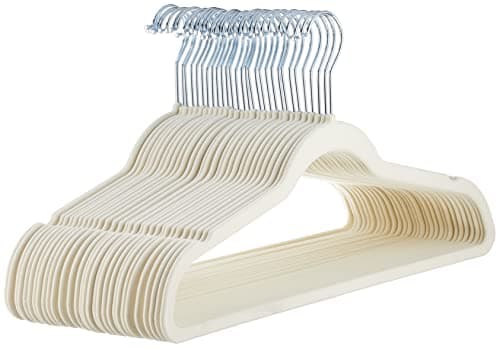
Ranked by capacity gained per dollar rather than by price. The cheapest item here is not the best value, and the best value is free.
By Scooter M.Published September 13, 2026Content updated September 13, 2026Prices verified September 14, 2026How we pick
Bin & Basket earns a commission when you buy through our links, at no extra cost to you. We are an Amazon Associate. We accept no free products, no sponsored placements and no paid inclusion, and commission rate plays no part in what we recommend. Full disclosure.
Spend nothing first, then spend on hangers. Removing what you do not wear costs nothing and typically frees more rod than any purchase on this page. After that, slim flocked hangers are the highest capacity-per-dollar item in the entire category: they roughly halve the rod length each garment occupies for the price of a takeaway. Only once those two are done is it worth buying structure.
That ordering is the actual advice. Most budget closet spending goes on bins before hangers, which buys containment rather than capacity, and containment was rarely the problem.
How this page is ranked
Not by price. A $9 item that solves nothing is worse value than a $25 item that frees a foot of rod. The criterion is capacity or access gained per dollar, and the ranking follows this order:
Does it create usable space, or just tidy existing space? Creating beats tidying.
Is it reversible? A budget buyer cannot afford a mistake that is screwed to a wall.
Does it need tools or a landlord's permission? Both raise the true cost well past the sticker.
Will it still be doing its job in five years, or is it a consumable pretending to be furniture?
The free steps, which outperform most purchases
Take out what you have not worn in a year. In most closets this alone recovers more rod than any product below. It is also the step people skip in order to go shopping.
Move off-season clothes elsewhere. A closet holding two seasons is doing twice the work it needs to — where they go is on best off-season clothes storage.
Double-hang a section. If your clothes are mostly shirts, a second rod doubles that run's capacity, and the heights are on reach-in closet dimensions.
Raise the top shelf. The gap between rod and shelf is usually dead air, and moving the shelf costs nothing on an adjustable system.
Do all four before buying. What remains is a genuine shortfall rather than a tidying problem, and it is a much clearer brief to shop against.
#
Product
Best for
Score
Price
01
Amazon Basics Velvet Slim Non-Slip HangersA slim flocked hanger is the cheapest way to add hanging capacity to a closet you cannot make wider.
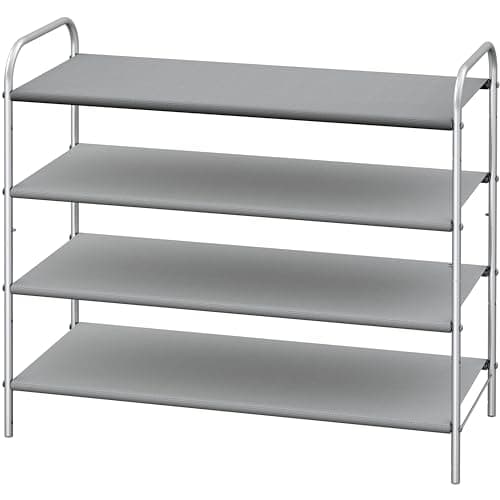
Simple Houseware 4-Tier Stackable Shoe RackA stackable metal frame that turns closet floor into four usable levels, and stacks further if the closet is tall.
Scores are our own, from the published rubric on the methodology page. They are editorial judgments about published specifications, not test results — we have not handled these units.
01
Getting more onto the same rod
Amazon Basics Velvet Slim Non-Slip Hangers
A slim flocked hanger is the cheapest way to add hanging capacity to a closet you cannot make wider.
Slim flocked plastic, materially thinner than a molded plastic hanger
Grip
Flocking holds wide necklines and satin that slide off smooth plastic
Capacity effect
Rod capacity is a function of hanger thickness — thinner hangers, more garments per foot
Published per-hanger load
Not published by the manufacturer in a form we could verify for flocked hangers as a class.
What it gets right
The single highest-impact cheap change in a crowded closet
Nothing slides off, which is the daily annoyance flocking actually fixes
A uniform hanger set makes a closet look organized on its own
What it does not
The plastic core snaps under a heavy winter coat
Flocking sheds onto dark clothing when new
Who it is for
Anyone whose closet is full because the hangers are thick, which is most people who think they have a space problem.
Skip this if
You are hanging tailoring or heavy coats. Slim hangers crease shoulders and the plastic core is not built for the weight — use wooden suit hangers for those.
02
Stacking on a deep shelf
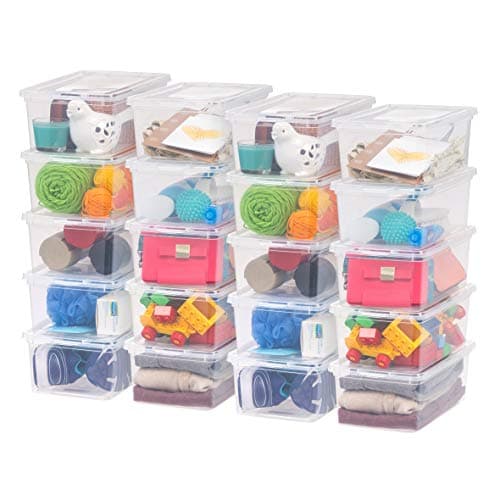
IRIS USA Stackable Storage Bins with Lids
Rigid stackable boxes in sizes that actually match a 12 to 16 inch shelf, rather than a garage shelf.
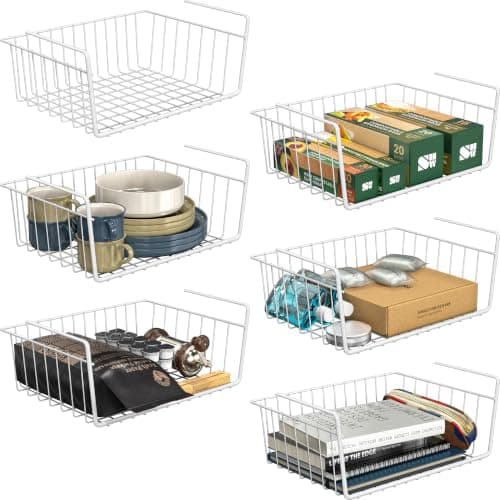
The hook opening is sized for a specific shelf thickness. Thick wooden shelves and some wire shelves will not accept it.
Headroom needed
The basket hangs below the shelf, so it consumes the spacing below
Published dimensions
Stated per model on the listing, including the hook opening
What it gets right
Uses space that is otherwise pure waste
No fixings, no tools, no damage
Cheap enough to fit several
What it does not
Hook opening is the whole compatibility question and is easy to get wrong
Steals headroom from the shelf below
Who it is for
A pantry with tall shelf spacing and short items on the shelves.
Skip this if
Your shelf is thicker than the basket's stated hook opening. This is the single most common reason these get returned — measure the shelf, not the gap.
05
Hanging space where there is no closet
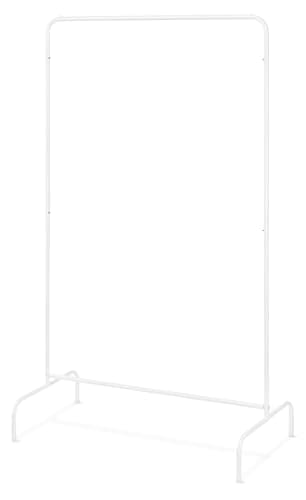
Whitmor Freestanding Garment Rack
A standalone rod on legs. Not elegant, but it is hanging capacity that needs no wall at all.
Steel tube frame with a single hang rod, most models with a lower shelf
Published load
Not published by the manufacturer in a form we could verify consistently across the range; check the specific model listing.
What it gets right
Works in a room with no closet at all
Moves without leaving a mark
Cheap enough to be a stopgap rather than a commitment
What it does not
Tube frames flex; a fully loaded rack leans
Nothing is behind a door, so the room reads as a wardrobe
Who it is for
A bedroom with no closet, an overflow season change, or a temporary set-up during a renovation.
Skip this if
You need the clothes out of sight. This is open hanging storage and it always looks like it.
The one structural purchase on this list that needs no wall at all is a freestanding rack, and the cheap ones fail in a specific and predictable way - the capacity figures and the span problem are on best garment racks.
Where cheap is a false economy
Three things in this category are worth more than the budget version, and it is worth being blunt about them.
Tension rods as load-bearing hanging. A cheap tension rod holding a closet's worth of coats fails eventually, and it fails all at once onto the floor. If it carries weight, fix it to the wall. The warning in full is on renter-friendly closet organizers.
Anything screwed into drywall without hitting a stud. The published load ratings of every wall system assume studs, and an anchor-only install is not covered by them — see shelf span and weight.
Wire hangers. They cost almost nothing and they deform shoulders permanently. The garment is worth more than the saving.
What a small budget buys, in order
Spending order for a closet on a budget
Step
Roughly what it costs
What it returns
Remove what you do not wear
Nothing
Usually the largest single gain available
Slim flocked hangers
Low
Roughly halves rod length per garment
Clear stackable bins for the shelf
Low
Makes the top shelf usable instead of a heap
A stackable shoe rack
Low to moderate
Clears the floor, which is a whole zone recovered
Under-shelf baskets
Low
Uses the dead air above short items
A freestanding garment rack
Moderate
Adds hanging with no wall fixings at all
Price positions are qualitative on purpose — live prices for every pick are shown on the buy rows above, and a number typed into a table is stale within weeks.
When budget is the wrong approach entirely
If your closet is a single rod with one shelf and the floor is full, incremental purchases will keep half-solving it. At that point the structural answer is a cheap wire system, which costs more up front and more than pays it back in recovered volume — the options are on best wire closet shelving, and what the tiers actually cost is on what a closet system costs.
What we are not telling you
We have not handled every product here, and we do not print prices in prose — the buy rows carry the live price and the table above deliberately uses qualitative brackets instead.
The capacity claims for slim hangers come from hanger thickness arithmetic we publish openly on best hangers by garment rather than from a test. Where a maker publishes no load rating, the product entry says so. The method is on how we pick.
FAQ
Questions people ask about this
What is the cheapest way to organize a closet?
Remove what you do not wear, then buy slim flocked hangers. The first costs nothing and usually frees more rod than any purchase; the second roughly halves the rod length each garment takes for very little money. Structure is worth buying only after both.
Are cheap closet organizers worth it?
Most are, with three exceptions: tension rods used to carry real hanging weight, anything screwed into drywall without hitting a stud, and wire hangers. In those cases the cheap version either fails suddenly or damages the clothes, and the saving is not real.
What should you buy first for a closet on a budget?
Hangers, after decluttering. They are the highest capacity-per-dollar item in the category because they change how much rod each garment occupies. Bins come later — they contain things rather than creating space, and containment is usually not the actual problem.
Can you organize a closet without drilling?
Yes, and on a budget it is often the better call. Slim hangers, stackable bins, a floor-standing shoe rack, under-shelf baskets and a freestanding garment rack between them add real capacity without a single fixing or a landlord conversation.
How much should you spend on closet organization?
Spend nothing until the closet holds only clothes you actually wear, because that step changes the brief. After that, a modest budget spent in order — hangers, then shelf bins, then floor storage — transforms most closets, and only a genuinely undersized closet needs a full system.
Is a cheap closet system better than nothing?
Usually yes, provided it is fixed into studs. The failure mode that makes cheap systems look bad is almost always the installation rather than the product — every published load rating in this category assumes screws into studs, and an anchor-only install is not covered by it.
Availability check, 13 September 2026Every product added for these pages was resolved through the Amazon Creators catalog on that date and carried a New buy-box offer at the time of writing. Products with no verifiable listing were not featured.
What is not a source hereWe have not handled these products. Nothing on this page is a test result, and no figure comes from a retailer listing, another publisher, or memory.