One question decides this: does anything go on top? Fabric collapses, rigid stacks, and nothing does both.
By Scooter M.Published September 1, 2026Content updated September 1, 2026Prices shown live on AmazonHow we pick
Bin & Basket earns a commission when you buy through our links, at no extra cost to you. We are an Amazon Associate. We accept no free products, no sponsored placements and no paid inclusion, and commission rate plays no part in what we recommend. Full disclosure.
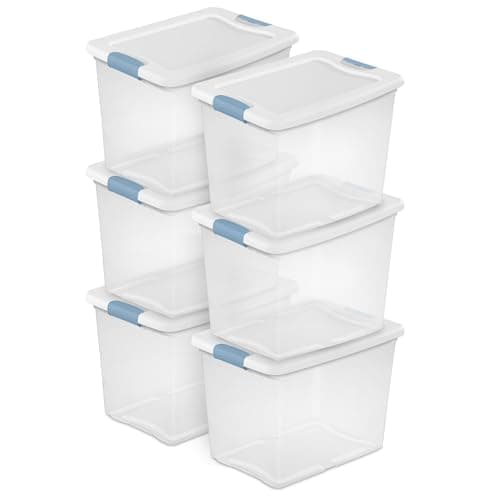
If anything goes on top, buy rigid latching boxes. If nothing does, buy fabric. Fabric bin sides carry no load, so a fabric bin with a box on it collapses inward; rigid boxes are designed so the lid carries the box above. Everything else — handles, transparency, price — is secondary to that one structural fact.
Bins are not optional on wire shelving. Wire ventilates, which is why closets use it, and the price of that ventilation is that small items tip and fall through. Budget for bins at the same time as the shelf rather than discovering the problem afterwards — the material trade is set out on wire vs wood shelving.
#
Product
Best for
Score
Price
01
No imagemDesign Fabric Storage Bins with HandlesSoft-sided bins that turn an untidy shelf into labeled blocks, and collapse flat when you stop needing them.
Scores are our own, from the published rubric on the methodology page. They are editorial judgments about published specifications, not test results — we have not handled these units.
01
No image
Shelf clutter
mDesign Fabric Storage Bins with Handles
Soft-sided bins that turn an untidy shelf into labeled blocks, and collapse flat when you stop needing them.
Rigid polypropylene with a latching or friction lid depending on model
Stackability
Designed to stack loaded
Published dimensions
Stated per size on the listing; check against your shelf depth
What it gets right
Stacks properly under load
Sizes that suit a shelf rather than a garage floor
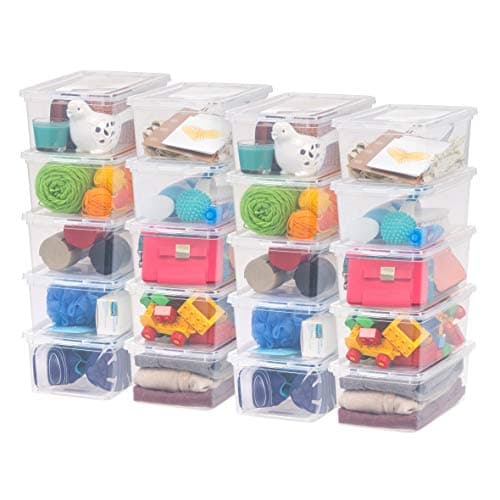
Clear bodies mean no labeling required
What it does not
Rigid boxes waste corner space in an irregular pantry
Lids are a separate thing to lose
Who it is for
Deep pantry shelves where things get lost at the back.
Skip this if
Your pantry shelf spacing is under about 8 inches. Stacking is the reason to buy these, and there is no stacking headroom in a tight spacing.
Fabric versus rigid, attribute by attribute
The two bin types compared
Attribute
Fabric
Rigid with lid
Stacking when full
No — the sides carry nothing
Yes — the lid carries the box above
Half-full behavior
Sides collapse inward
Holds shape
Visibility
Opaque; needs a label
Usually clear; no label needed
Weight
Very light
Heavier, and heavier again when full
Storage when empty
Folds flat
Nests at best; takes space at worst
Dust and pests
Open top lets both in
Latched lid keeps both out
High-shelf access
Handles make it easy
Getting a latching lid off above head height is a two-handed job
Fitting an irregular space
Flexes into it
Wastes the corners
This is a structural comparison of the two constructions. We have not tested individual bins.
Sizing bins to your shelf
The mistake is buying by capacity and discovering the depth. Closet shelving comes in 12 inch and 16 inch depths across the ClosetMaid ranges, and a bin deeper than the shelf overhangs the front edge, which looks wrong and catches on clothing.
Measure the shelf depth, front rail to back wall.
Subtract about an inch so the bin sits fully on the shelf rather than flush with its edge.
Measure the vertical spacing to the shelf above. A bin you cannot lift out without tipping is a bin you will stop using.
Divide the width into a whole number of bins. Two bins that fit exactly beat three that nearly do.
Buy one first, then the rest. The cost of getting this wrong across eight bins is the reason.
If the problem is that there is no shelf to put a bin on, the fix is a hanging closet organizer rather than another bin — it adds the shelves themselves, using rod space instead of wall.
If the problem is a stack that leans rather than loose items that scatter, a bin is the wrong tool - you want a divider, which keeps the pile upright while leaving it visible. The sizing is on best closet shelf dividers.
The same fabric-versus-rigid decision applies under a bed, where clearance rather than shelf height sets the limit. Those containers are ranked on published height on best under-bed storage.
What goes in which
Fabric: linens, off-season clothing, accessories, anything soft and light that you access regularly and never stack.
Rigid latching: seasonal storage, textiles going up for six months, anything on a top shelf, anything you want protected from dust or moths. The moth argument is real and is covered on pantry moths — the same larvae get into wool.
Neither: shoes. Use a rack. Shoes in a closed bin stay damp.
FAQ
Questions people ask about this
What are the best storage bins for a closet?
Rigid latching boxes if anything stacks on top, fabric bins if nothing does. Fabric sides carry no load and collapse under a box; rigid boxes are built so the lid supports the one above. Everything else follows from that.
Can you stack fabric storage bins?
Not when they are full. The sides are unsupported, so a loaded fabric bin collapses inward under anything placed on it. If stacking is the point, buy rigid boxes with latching lids.
What size storage bins fit closet shelves?
Measure the shelf depth and subtract about an inch. Closet shelving is commonly 12 or 16 inches deep, and a bin deeper than the shelf overhangs the front edge and catches on clothing. Check the vertical clearance too — a bin you have to tip to remove will not get used.
Do you need bins on wire shelving?
In practice yes. Wire ventilates, which is why closets use it, and the cost of that is that small items tip and fall through the gaps. Budget for bins alongside the shelving rather than afterwards.
What should you store in clear boxes rather than fabric?
Anything seasonal, anything going on a top shelf, and anything you want protected from dust or moths. A latched lid keeps both out; an open fabric bin keeps out neither.
ClosetMaid published product specificationsSuperSlide and Shelf & Rod depth options and rod-support spacing.
What is not a source hereWe have not handled these products. Nothing on this page is a test result, and no figure comes from a retailer listing, another publisher, or memory.