Half the dividers sold will not fit your shelves at all. Which half depends on one thing you can check in five seconds.
By Scooter M.Published September 13, 2026Content updated September 13, 2026Prices verified September 14, 2026How we pick
Bin & Basket earns a commission when you buy through our links, at no extra cost to you. We are an Amazon Associate. We accept no free products, no sponsored placements and no paid inclusion, and commission rate plays no part in what we recommend. Full disclosure.
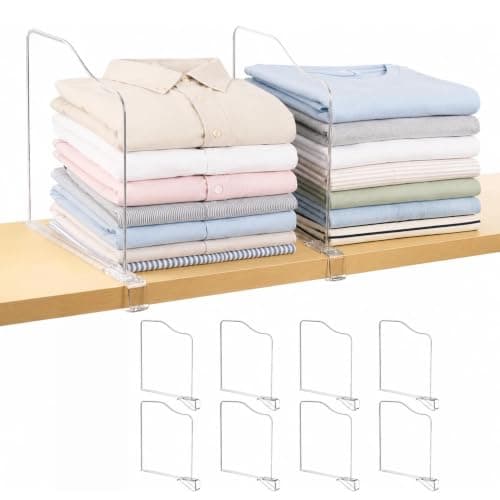
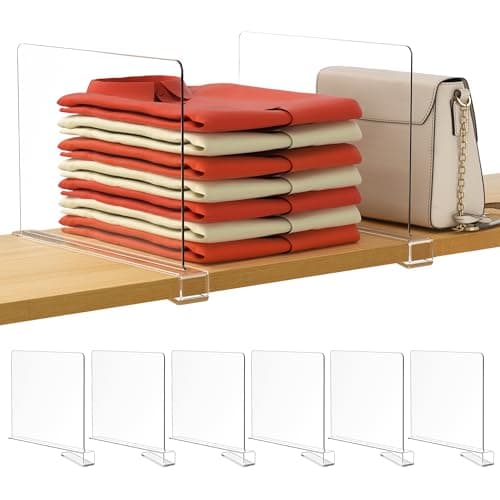
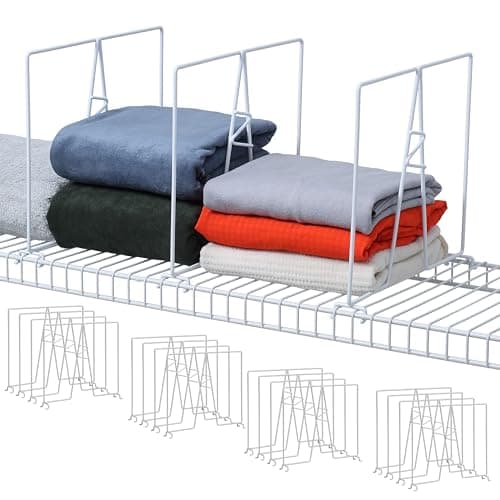
Look at your shelf before you look at any product. If it is ventilated wire, you need a divider that clamps to a wire edge. If it is a solid board, you need one that slots over it. The two are not interchangeable, and this is the single reason most shelf dividers get returned. For a wire-shelved closet, the ziroland wire dividers are the pick. For solid shelves holding tall stacks, the 12 inch Vtopmart dividers are the ones with enough height to actually contain a sweater pile.
Everything else in this category — clear versus white, six-pack versus twelve — is preference. Shelf type is not preference, it is compatibility, and no amount of good reviews rescues a divider that has nothing to grip.
The criteria, before any product
Shelf dividers are a simple product and there are only four things worth checking. In this order:
Shelf type. Ventilated wire or solid board. A wire divider clamps around the front wire; a solid-shelf divider slots over the board. Neither works on the other.
Shelf thickness, if the shelf is solid. The slot is cut for a particular board thickness and almost nobody publishes the limit. Measure yours before ordering.
Divider height against stack height. A divider shorter than the pile it is dividing does nothing — the stack simply leans over the top of it.
Shelf depth against divider depth. A 12 inch divider on a 16 inch shelf leaves the back four inches of the stack unsupported, which is where the lean starts.
That last pair is where the arithmetic lives, and it is the reason this page ranks on height rather than on brand.
Divider height against what you are stacking
Stack height by garment, and the divider height that contains it
Stacked item
Practical stack height
Divider height to look for
T-shirts, folded
6 to 8 in before it leans
8 in and up
Jeans and heavy trousers
8 to 10 in
10 in and up
Sweaters and knitwear
8 to 10 in, and bulkier
12 in
Towels and bed linen
10 in and up
12 in
Handbags, stood upright
Item height
Taller than the bag, or it tips over the top
Stack heights are the practical limits we use for closet planning, consistent with the figures on our drawers-versus-shelves guide. They are not manufacturer specifications and the table says so. Divider heights are the published sizes sellers state.
The common mistake is buying an 8 inch divider for a sweater shelf. It holds the bottom half of the pile and the top half falls over it, which looks exactly like the problem you were trying to fix. The underlying stack figures are on drawers vs shelves.
#
Product
Best for
Score
Price
01
ziroland Wire Shelf Dividers, 12 in DeepThe divider style that clamps onto a wire shelf rather than a solid one, which is the version most closets actually need.
Vtopmart Extra Tall Shelf Dividers, 12 inThe height is the whole product. A 12 inch divider holds a stack that an 8 inch one simply lets fall over the top.
Scores are our own, from the published rubric on the methodology page. They are editorial judgments about published specifications, not test results — we have not handled these units.
01
Wire shelving, which most dividers do not fit
ziroland Wire Shelf Dividers, 12 in Deep
The divider style that clamps onto a wire shelf rather than a solid one, which is the version most closets actually need.
Solid shelves, via a slot that sits over the shelf board
Published shelf thickness limit
Not published by the manufacturer in a form we could verify - measure your shelf before ordering
Published load rating
Not published by the manufacturer in a form we could verify
What it gets right
Transparent, so a divided shelf still reads as one space rather than a row of walls
No tools and no damage, which matters in a rental
Sold in multiples, so a full shelf costs little
What it does not
The slot fits a specific shelf thickness and nobody publishes the limit - a thick shelf simply will not take it
Acrylic cracks rather than bends if a heavy stack falls against it
Shows every fingerprint, which is the price of clear
Who it is for
Solid closet shelves holding folded knitwear or bags that topple into each other.
Skip this if
Your shelving is wire. These slot over a solid board and have nothing to grip on a wire shelf.
What almost nobody in this category publishes
Two figures decide whether a divider works and essentially no seller prints either.
The shelf thickness the slot accepts. Solid-shelf dividers are cut for a range, and a thick melamine shelf or one with a bullnose front edge will not enter it. Measure the front edge of your shelf with a ruler before ordering.
A load rating. A divider takes a sideways push from a leaning stack. Nobody states how much. Treat them as organizers rather than as structure, and do not expect one to hold back a shelf's worth of books.
We have marked both as not published on every product here rather than estimating them. That is a genuine gap in the category, not a gap in our research.
Where dividers are the wrong answer
The shelf is too deep. Past about 16 inches you are not fighting a leaning stack, you are fighting an unreachable back row, and a divider does nothing for that. Use bins that pull out instead.
The items are small and loose. Socks, scarves and packets fall through and around a divider. A bin contains them; a divider only stops them sideways.
The shelf gap is short. If there is only 9 inches between shelves, a 12 inch divider does not fit and the stack was never going to be tall enough to topple anyway.
You actually need a drawer. If the pile is disturbed every day, dividers slow the collapse rather than preventing it — the case for drawers is on best closet drawer towers.
Dividers or bins
These two products solve adjacent problems and get confused constantly.
A divider keeps a stack vertical while leaving it visible and immediately reachable. You take the top item without touching anything else. It suits things you use weekly and fold flat.
A bin contains loose or irregular items and pulls out, which is what a deep shelf needs. What it costs you is visibility — a bin is opaque to the eye even when it is clear, because you see the bin before you see the contents. The comparison in full is on best closet storage bins.
Most finished closets end up with both: dividers on the eye-level shelf where the folded clothes live, bins on the high and low shelves where depth and reach are the problem.
What we are not telling you
We have not handled these dividers. Sizes and pack counts above are the sellers' published figures. Shelf-thickness limits and load ratings are not published by anyone in this category, and every product here says so rather than carrying an estimate.
The stack heights in the table are our planning figures, derived from ordinary folded garments and consistent across our closet pages, and the table labels them as such rather than dressing them as sourced data. The method is on how we pick.
FAQ
Questions people ask about this
Do shelf dividers work on wire shelving?
Only the ones designed for it. A wire divider clamps around the front wire of a ventilated shelf; a solid-shelf divider slots over a board and has nothing to grip on wire. Check the front edge of your shelf before ordering — this is the main reason shelf dividers get returned.
How tall should a closet shelf divider be?
Taller than the stack it is dividing. T-shirts stack 6 to 8 inches before they lean, jeans 8 to 10, and sweaters bulkier still — so a sweater shelf wants a 12 inch divider. An 8 inch divider under a sweater pile holds the bottom half and lets the top half fall over it.
How much weight can a shelf divider hold?
No manufacturer in this category publishes a figure we could verify. Treat dividers as organizers rather than structure: they resist a sideways lean from folded clothes, and they are not designed to hold back a shelf of books.
Will shelf dividers fit my shelf thickness?
Measure the front edge before ordering, because almost no seller publishes the slot range. A thick melamine shelf or one with a rounded bullnose front edge often will not enter a slot divider at all, and a wire divider is the alternative only if the shelf is actually wire.
Are shelf dividers better than bins?
They do different jobs. Dividers keep a stack upright while leaving it visible and instantly reachable, which suits weekly-use folded clothes. Bins contain loose or irregular items and pull out, which is what a deep shelf needs. Most closets end up using both on different shelves.
Do shelf dividers damage the shelf?
No. Both styles clip or slot on and come off without fixings or marks, which makes them one of the few closet upgrades a renter can make freely. The trade is that nothing holds them laterally except friction, so they slide if pushed hard.
Sources
Where these figures come from
Where a figure is absentSeveral categories on these pages are dominated by sellers that publish a pack count and an overall size and nothing else - no load rating, no clearance height. Where that is the case the row says so rather than carrying an estimate.
Availability check, 13 September 2026Every product added for these pages was resolved through the Amazon Creators catalog on that date and carried a New buy-box offer at the time of writing. Products with no verifiable listing were not featured.
What is not a source hereWe have not handled these products. Nothing on this page is a test result, and no figure comes from a retailer listing, another publisher, or memory.