A child's closet is an adult closet at the wrong scale. Fix the scale and most of the mess fixes itself.
By Scooter M.Published September 6, 2026Content updated September 6, 2026Prices verified September 14, 2026How we pick
Bin & Basket earns a commission when you buy through our links, at no extra cost to you. We are an Amazon Associate. We accept no free products, no sponsored placements and no paid inclusion, and commission rate plays no part in what we recommend. Full disclosure.
Two changes do almost all of the work: put the clothes on child-width hangers, and put a rod at a height the child can actually reach. A child's garment is roughly half the shoulder width of an adult's, so an adult hanger wastes about half the rod on every item. And a rod at the standard 66 to 68 inches is unreachable to anyone under about ten, which guarantees an adult does all the putting away forever.
Everything else in a child's closet — bins, labels, shoe storage — is worth doing and is second-order next to those two. Get the scale right first.
The hanger is the cheapest capacity you will ever buy
An adult hanger is 17 to 18 inches across the shoulders because an adult shirt is. A toddler's shirt is nowhere near that, so hanging it on an adult hanger reserves shoulder width that nothing occupies. Put a child's wardrobe on child-width hangers and the same rod holds roughly twice as many garments.
There are two sizes worth knowing. Baby hangers are cut for infant and toddler clothes. Around 14 inches is the size that fits school-age clothes, and it is the one most shops skip — they jump from baby straight to adult. If you buy adult hangers for a six-year-old, you are paying for the wasted width every day until they grow into it.
Flocking matters more here than in an adult closet, because wide-neck children's clothes slide off smooth plastic constantly. The general case for slim flocked hangers is on best hangers by garment.
Rod height, by who is meant to use it
Reaching height against standard closet heights
Rod position
Typical height
Who can reach it
Standard single rod
66 to 68 in
Adults, and roughly age 11 and up
Upper rod in a double hang
70 to 84 in
Adults only
Lower rod in a double hang
About 40 to 42 in
Most children from about age 4
Child-height rod
Set to the child's reach, commonly 30 to 40 in
The child it was measured for
The standard adult figures are the published residential norms compiled on our reach-in dimensions page. The child rows are the practical consequence, not a published standard — measure your own child rather than trusting a table, including ours.
The useful insight is that a standard closet already contains the answer. Double-hanging puts a second rod at about 40 to 42 inches, which is a child-reachable height, and it doubles the hanging capacity at the same time. You are not inventing a special child's closet; you are using the ordinary double-hang layout and giving the child the bottom half. The spacing arithmetic is on reach-in closet dimensions.
#
Product
Best for
Score
Price
01
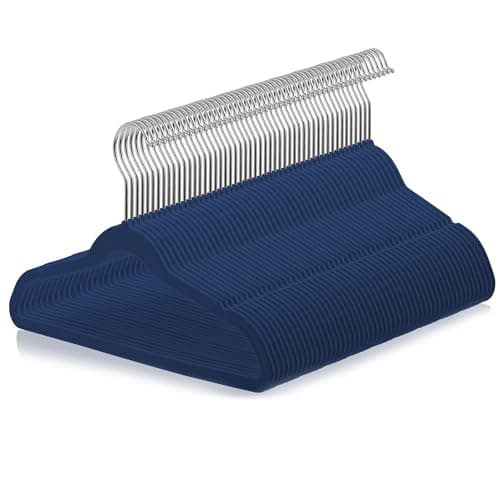
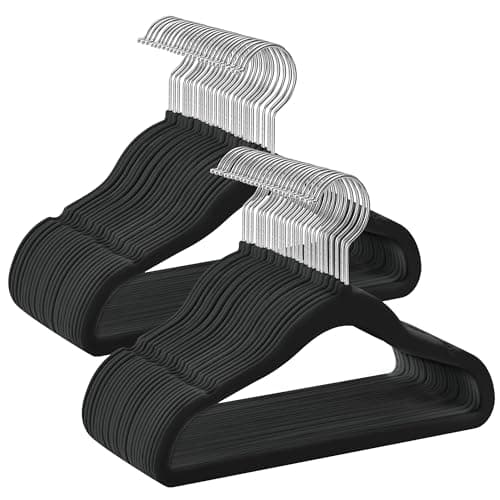
SONGMICS Baby Velvet HangersA child's shoulder is roughly half an adult's, and an adult hanger in a nursery wastes that difference on every garment.
No imagemDesign Fabric Storage Bins with HandlesSoft-sided bins that turn an untidy shelf into labeled blocks, and collapse flat when you stop needing them.
Scores are our own, from the published rubric on the methodology page. They are editorial judgments about published specifications, not test results — we have not handled these units.
01
A nursery rod that fits twice as much
SONGMICS Baby Velvet Hangers
A child's shoulder is roughly half an adult's, and an adult hanger in a nursery wastes that difference on every garment.
Adds a concentrated load to the rod rather than to the floor
Published capacity
Not published by the manufacturer in a form we could verify per compartment.
What it gets right
Shoes are visible and reachable without bending
No fixings
Compartments keep pairs together
What it does not
Consumes a section of hanging rail
Loads the rod at one point, which is where a rod sags
Who it is for
A closet with spare rod length and no usable floor.
Skip this if
Hanging space is your constraint. This trades rod length for shoe storage, and in a small closet that is a bad trade.
The top shelf is for you, not for them
Once the child owns the lower rod, the upper half of the closet becomes adult territory, and it has an obvious job: the next size up. Children's clothes arrive in waves — hand-me-downs, gifts, the sale you could not resist — and the storage problem is as much about clothes that do not fit yet as clothes that do.
One labeled box per size ahead, on the top shelf. Clear boxes if you want to see them, opaque with a label if the closet is visible from the room.
One outbound box for outgrown clothes, at floor level where a child can drop things in without help.
Nothing unsorted. The failure mode is a single box of mixed sizes that nobody ever opens.
Label by size, not by season. Children outgrow faster than the weather turns, and a size label stays true.
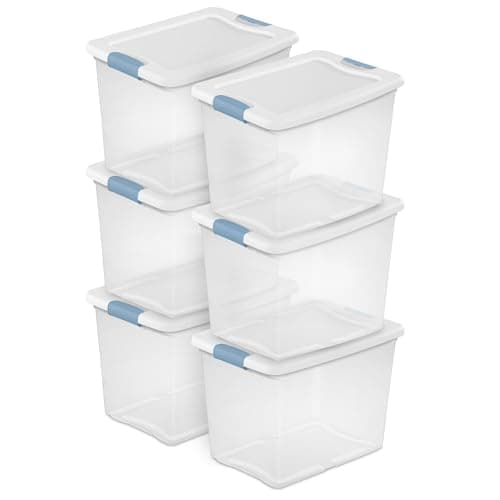
Clear stacking boxes are the right shape for this because you can read the contents without unstacking. The comparison against fabric is on best closet storage bins.
Bins at floor level, and why fabric wins here
For the things a child puts away themselves, fabric bins beat rigid boxes for one reason: they have no lid to defeat and no sharp corner to bruise a shin. A bin that a four-year-old can drag out, drop things into and push back is a bin that gets used. A latched box is not.
Keep the count low. Three or four bins with obvious categories — soft toys, shoes, dress-up, sports kit — works. Twelve bins with fine-grained categories is an adult's filing system imposed on someone who will not maintain it.
Shoes, which are the actual floor problem
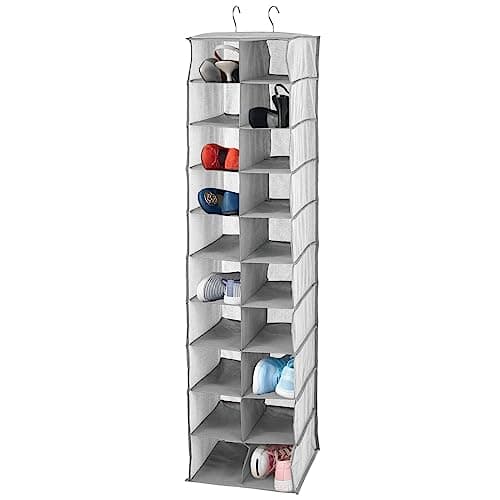
Children's shoes are small, numerous and nearly always on the closet floor. A hanging shoe column works well in a child's closet specifically because it uses rod space, and a child's clothes need so much less rod that there is usually some spare once the hangers are right.
Hang it at the child's end of the rod at their height, not above it. A shoe organizer they cannot reach is an adult's job, and the entire aim here is to stop it being one. Alternatives are on best closet shoe racks.
What changes as they grow
Nursery. Almost nothing hangs. Most of the volume is folded, so bins and a dresser matter more than rod, and baby hangers handle what does hang.
Preschool to about 8. The lower rod at 40 to 42 in becomes theirs. Child-width hangers around 14 in. Floor bins for toys and shoes.
About 8 to 12. Hanging volume climbs, and this is when the rod fills. Raise their rod as they grow rather than moving them to the adult one.
12 and up. They reach the standard rod and the closet becomes an ordinary one — at which point organizing a small closet is the page you want.
What we are not telling you
The adult rod heights and closet depths above are published residential figures, cited at the foot of this page. The child-height rows are the practical consequence of those figures rather than a published standard, and we have said so in the table rather than dressing them up as sourced data.
We have not handled the hangers or bins recommended here, and no manufacturer in this category publishes a load rating we could verify. The method is on how we pick.
FAQ
Questions people ask about this
What size hangers do kids' clothes need?
Baby hangers for infant and toddler clothes, and about 14 inches for school-age clothes. Adult hangers are 17 to 18 inches because an adult shirt is that wide, so using them for a child's wardrobe wastes roughly half the rod on every garment.
How high should a rod be in a kids' closet?
Low enough that they can reach it without going on tiptoe — commonly 30 to 40 inches, but measure your own child and take about four inches off their comfortable reach. Conveniently, the lower rod of a standard double hang sits at about 40 to 42 inches, which suits most children from around age four.
How do you double the hanging space in a kids' closet?
Two changes, and they compound. Child-width hangers roughly double the garments per foot of rod, and adding a second rod in a double-hang layout doubles the rod itself. Children's clothes are short, so a double hang fits a child's closet far more easily than an adult's.
Should you use bins or boxes in a kids' closet?
Fabric bins at floor level for anything the child puts away themselves, because there is no lid to defeat and no hard corner. Clear labeled boxes on the top shelf for the next size up, which is an adult's job and benefits from being readable without unstacking.
How do you store kids' clothes they have not grown into yet?
One labeled box per size ahead on the top shelf, plus one outbound box at floor level for outgrown clothes. Label by size rather than by season, since children outgrow faster than the weather changes. The failure mode is a single unsorted box nobody opens.
Where should kids' shoes go in a closet?
A hanging shoe column at the child's height, not above it. Children's clothes need much less rod once they are on child-width hangers, so there is usually rod to spare — and shoes on the floor is the problem you are solving.
Availability check, 6 September 2026Every product added for these pages was confirmed on sale at a national retailer on that date. Products that could not be confirmed in stock were not featured.
What is not a source hereWe have not handled these products. Nothing on this page is a test result, and no figure comes from a retailer listing, another publisher, or memory.