01
Reach-in closet dimensions
One table with every number a reach-in needs, and the arithmetic behind the ones people get wrong.
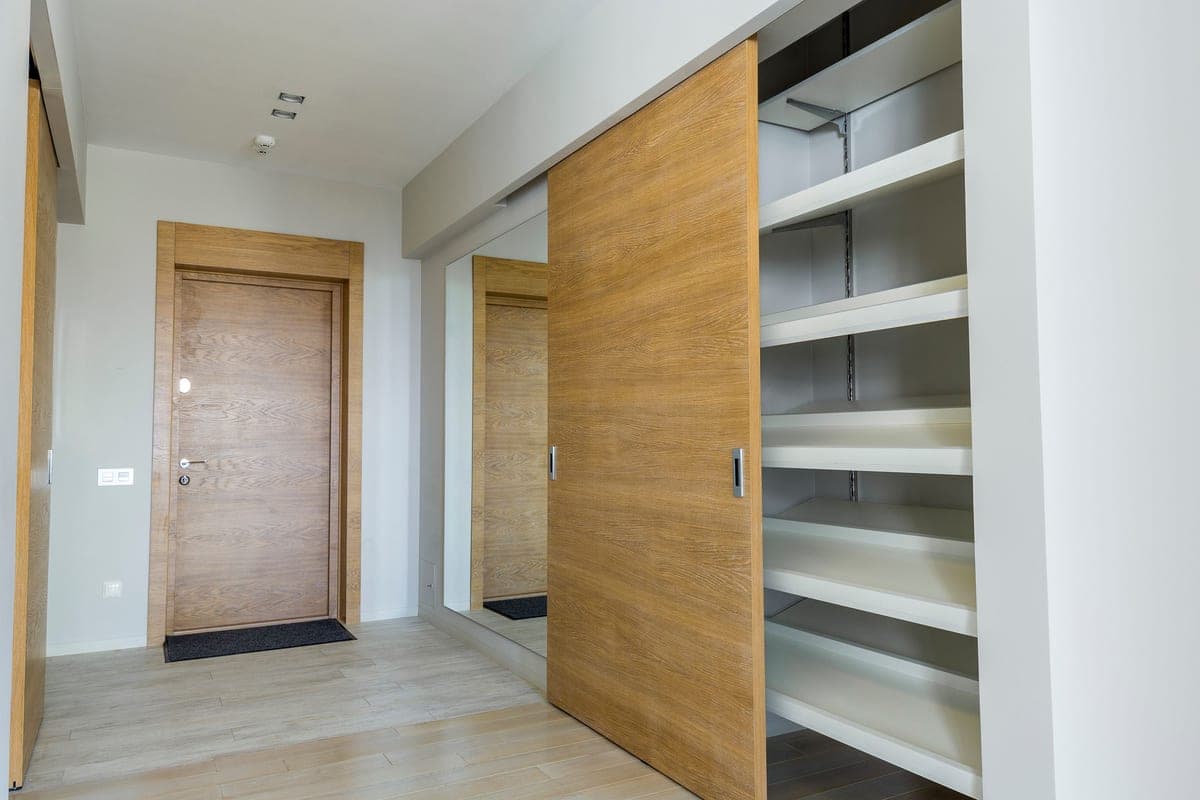
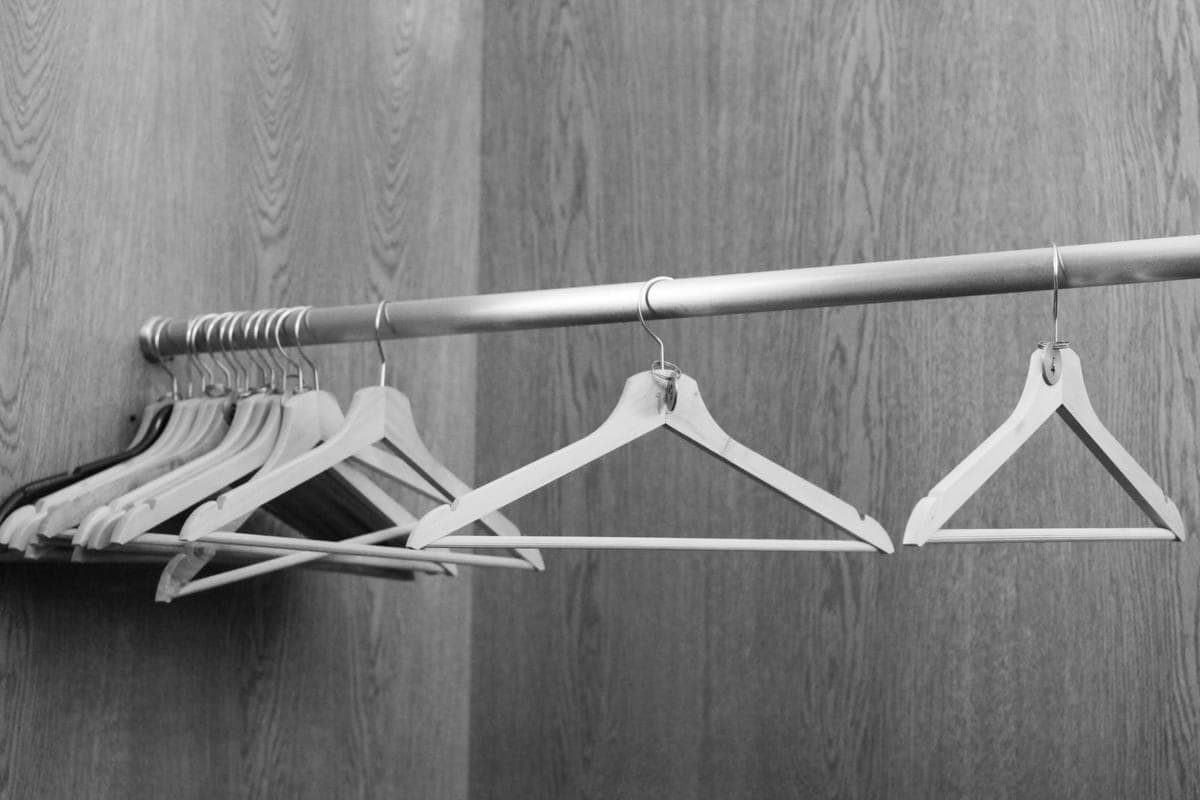
A standard reach-in closet is 24 inches deep. A single rod sits 66 to 68 inches from the floor. In a double-hang closet the lower rod sits about 40 to 42 inches and the upper rod 70 to 84 inches. The rod itself is set roughly 12 inches out from the back wall, which is what leaves a hanger room to sit square rather than at an angle.
Those four numbers decide almost everything else you can do in the space. This page gives you the full table, then shows where each figure comes from and what breaks when a closet misses it. If you are choosing between a reach-in and a walk-in, the trade-off is on reach-in versus walk-in. If you already know your numbers and want shelving that fits them, start at closet systems.
The full reach-in dimension table
| Dimension | Standard figure | What it controls |
|---|---|---|
| Depth, front to back | 24 in | Whether a hanger sits square and the door still closes |
| Usable depth after the door | About 22 in on a bifold, less on a sliding door | The real space you get to fill |
| Width | 3 ft to 8 ft | How many hanging feet you have |
| Height, floor to ceiling | 84 in to 96 in | Whether a second rod or a top shelf is possible |
| Single rod height | 66 in to 68 in | Long garments clearing the floor |
| Double hang, lower rod | 40 in to 42 in | Folded trousers and shirts |
| Double hang, upper rod | 70 in to 84 in | Shirts and jackets above the lower rod |
| Rod set-out from back wall | About 12 in | Hangers hanging square rather than skewed |
| Shelf above the rod | Typically 10 in to 12 in above rod height | Hanger clearance when lifting a garment off |
Figures per Dimensions.com closet storage element data and standard US residential practice. These are conventions, not a code requirement — your closet may miss any of them.
Why 24 inches is the depth
A standard adult clothes hanger is around 17 to 18 inches across the shoulders. Hung on a rod that sits about 12 inches out from the back wall, the garment occupies roughly the middle of a 24 inch cavity, with a few inches of air behind it and enough in front that the door leaf clears the sleeve.
Take depth below about 22 inches and two things happen at once. The hanger no longer fits square, so it turns and the garment presents at an angle. And a full rod pushes sleeves and shoulders against the inside of the door, which is why some closets never quite shut once they are full. Depth is the dimension you cannot fix with organizers. Everything else on this page has a workaround; this one does not.
Rod height, and why double hang is not free
A single rod at 66 to 68 inches suits a closet holding a mix of garment lengths. Dresses and long coats need that height to clear the floor. If everything you hang is a shirt or a folded trouser, that rod is wasting roughly three feet of vertical space beneath it.
Double hang recovers that space by running a lower rod at about 40 to 42 inches and an upper rod at 70 to 84 inches. The arithmetic is simple and worth doing before you commit: a shirt on a hanger occupies about 38 inches from the top of the hook to the hem, and a folded trouser about the same. Two rods at 42 and 80 inches gives each of them roughly 38 inches of clear drop, which works. Two rods at 40 and 72 inches gives the lower one 40 inches and the upper one 32, and the upper garments will brush the ones below.
| Garment | Approximate hanging length | Rod arrangement that suits it |
|---|---|---|
| Shirt, blouse, folded trouser | About 38 in | Double hang, either rod |
| Suit jacket | About 40 in | Double hang, upper rod |
| Full-length trouser, hung from the hem | About 46 in | Single rod, or upper rod only |
| Dress | 45 in to 60 in | Single rod at 66 in to 68 in |
| Long coat | 50 in to 60 in | Single rod, full height section |
Lengths are the practical planning figures used in closet layout, not manufacturer specifications. Measure your own longest garment before setting a rod height — that one measurement is the whole decision.
The honest conclusion is that most closets should be split rather than committed to one arrangement: a double-hang section for shirts and folded trousers, and a single full-height section for dresses and coats. Every adjustable system on our closet systems page can do that, and ClosetMaid ShelfTrack in particular exists to let you change the split later.
The shelf above the rod
Almost every reach-in has a shelf immediately above the rod, and almost every one of them is too low. You need enough clearance to lift a hanger vertically off the rod and swing it out. If the shelf sits four inches above the rod, you cannot — you have to tilt the hanger and drag the shoulder of the garment along the underside of the shelf.
Ten to twelve inches of clearance above the rod solves it. That is also enough to store a shallow box or a folded blanket on the shelf without it touching the hangers below.
What to do when your closet misses the standard
- Depth under 22 inches. Stop planning a hanging closet. Turn it into shelving and drawers, or hang garments sideways on a pull-out rail. A 16 in deep closet cannot hold a hanger square and no product fixes that.
- Depth over 26 inches. You have space for a second row, or for a shelf on the back wall behind the rod. Both are usually wasted. A deep reach-in is really a shallow walk-in — see reach-in versus walk-in.
- Ceiling under 84 inches. Double hang is marginal. You need about 38 inches of clear drop twice, plus rod and hardware, and a low ceiling does not give it. Single rod with a high shelf is the better use of the height.
- Width under 36 inches. Hanging is inefficient at this width because the door frame eats the ends of the rod. Consider shelving with bins instead, or a hanging fabric tower.
- No studs where you need them. This is a load problem, not a dimension problem. Read shelf span and weight before you buy anything that screws to the wall.
If you are building from an empty alcove rather than measuring an existing closet, these same figures are arranged as a sequence of decisions on building a simple closet.
Measuring your own closet in five minutes
- Measure depth from the back wall to the inside face of the closed door. Write that number down; it is the one that matters.
- Measure width inside the frame, at the back wall and again at the opening. On an older house these differ, and the smaller number is your usable width.
- Measure floor to ceiling inside the closet, not in the room. Closets frequently have a dropped soffit.
- Measure your longest hanging garment from the top of the hanger hook to the hem.
- Find the studs and mark them. Where they are decides which systems are usable at their published load — see shelf span and weight.
FAQ
Questions people ask about this
What is the standard depth of a reach-in closet?
24 inches. That gives a standard 17 to 18 inch hanger room to sit square on a rod set about 12 inches out from the back wall, with clearance for the door to close over a full rod.
What is the best depth for a reach-in closet?
24 inches is both the standard and, in practice, the best. Deeper wastes floor area you cannot reach past a single row of hangers; shallower forces the hanger to sit at an angle. If you have more than 26 inches, you are better off treating it as a shallow walk-in.
How high should a closet rod be?
66 to 68 inches from the floor for a single rod. For double hang, about 40 to 42 inches for the lower rod and 70 to 84 inches for the upper. Check your longest garment first: a shirt needs about 38 inches of clear drop and a dress can need 60.
How much space do you need between double closet rods?
Enough for the garments on the lower rod to hang clear. A shirt or folded trouser occupies about 38 inches, so a lower rod at 42 inches and an upper at 80 inches works. A lower rod at 40 and an upper at 72 leaves the upper garments only 32 inches and they will brush what is below.
How far from the back wall should a closet rod be?
About 12 inches in a 24 inch closet. Closer than that and the garments press against the back wall; further out and the door will not close over a full rod.
How high should the shelf above a closet rod be?
Ten to twelve inches above the rod. Less than that and you cannot lift a hanger straight up off the rod, which means dragging the garment's shoulder along the underside of the shelf every time.
Can you use a reach-in closet if it is only 18 inches deep?
Not for conventional hanging. A hanger is 17 to 18 inches wide and needs the depth to sit square. At 18 inches, convert the closet to shelving and drawers, or fit a pull-out rail that hangs garments sideways.
Sources
Where these figures come from
- Dimensions.com, closet storage element dataStandard reach-in depth, rod heights and double-hang spacing used across the US residential market.
- ClosetMaid published product specificationsSuperSlide and Shelf & Rod depth options and rod-support spacing.
- What is not a source hereWe have not handled these products. Nothing on this page is a test result, and no figure comes from a retailer listing, another publisher, or memory.