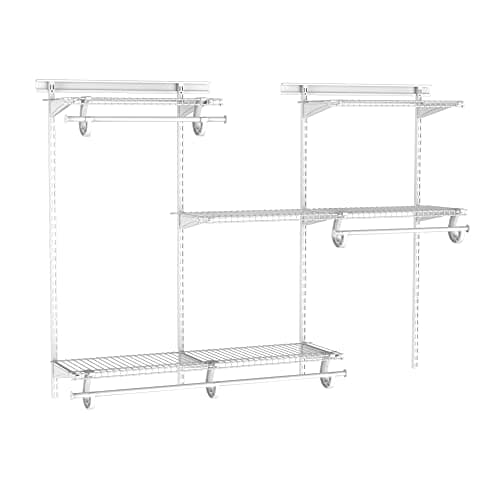
Linen closets need the two things a clothes closet does not: shelves that move, and air moving through the stack from below.
By Scooter M.Published September 14, 2026Content updated September 14, 2026Prices verified September 14, 2026How we pick
Bin & Basket earns a commission when you buy through our links, at no extra cost to you. We are an Amazon Associate. We accept no free products, no sponsored placements and no paid inclusion, and commission rate plays no part in what we recommend. Full disclosure.
Buy adjustable, ventilated shelving — in that order of importance. A linen closet holds stacks of wildly different heights: bath towels want 12 to 14 inches of gap, flannels want 8 to 10, and sheet sets want something in between. Fixed shelves are set once for an average that suits nothing, which is why ClosetMaid ShelfTrack is the pick here even though a fixed wire kit is cheaper. Ventilation is the second criterion, because linen goes away warm from the dryer far more often than anyone admits.
If you cannot drill — a rental, a masonry wall, a closet you do not own — skip to the freestanding picks. Every published load figure in this category assumes screws into wood studs, and none of them describes a shelf hung on anchors alone.
Why a linen closet is not a clothes closet
It is worth being precise about this, because most closet-shelving advice is written for hanging clothes and quietly gets a linen closet wrong.
Nothing hangs. So the rod that ships with nearly every closet kit is dead weight you paid for. Shelf-only kits exist and are the correct product.
The stack heights vary far more. A clothes closet holds folded items of broadly similar bulk. A linen closet holds bath sheets and washcloths on the same run, and that is what makes adjustability worth paying for.
The contents arrive damp. Warm from the dryer or not-quite-dry from the line, into a closed cupboard. That is the argument for ventilated shelving and it does not apply to a shirt you wore once.
It is usually deeper than it needs to be. Linen closets are often built at 24 inches, and past about 16 the back of the shelf becomes a place things are forgotten.
The full stack-height table — what a folded bath towel actually measures and what gap each contents type wants — is on organizing a linen closet. Measure your own folded stack before you set a single shelf height.
The criteria, in the order they decide the purchase
Can you fix to the wall at all? If not, nothing else matters and the answer is freestanding. Every published load figure here is conditional on studs.
Do the shelves move? Adjustable is worth real money in a linen closet specifically, because the stack heights differ so much.
Ventilated or solid? Wire lets air through the stack; solid does not. Damp linen in a closed cupboard is how a linen closet starts to smell.
Depth. 12 to 16 inches. Past that you are storing towels behind towels.
Published load. Wet-ish towels are heavier than they look, and only one brand here publishes a figure at all.
The four shelving types, compared
Shelving options for a linen closet
Type
Adjustable
Ventilated
Needs the wall
Published load
Adjustable wire track (ShelfTrack)
Yes - shelves move on the standards
Yes
Yes, into studs
About 83 lb per bracket
Fixed wire shelf kit
No - set once
Yes
Yes, into studs
About 83 lb per bracket
Expandable in-gap shelf
Yes, within one gap
Partly - depends on the shelf
No
Not published
Freestanding unit
No - fixed tiers
No - solid shelves
No
Not published
The ClosetMaid figures are its own published numbers for its wire ranges, conditional on screws into studs, and sourced at the foot of this page. The freestanding and expandable products publish no load figure we could verify, and the rows say so rather than carrying an estimate.
#
Product
Best for
Score
Price
01
ClosetMaid ShelfTrack Adjustable Closet Organizer KitAn adjustable hang-track system that lets you move every shelf later, which is the thing you will actually want to do.
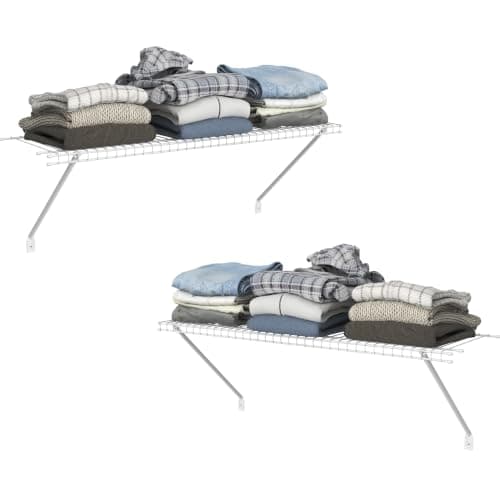
ClosetMaid Ventilated Wire Shelf KitThe shelf-only kit, which is what a linen closet actually needs - almost every other closet kit ships a hanging rod you will never use.
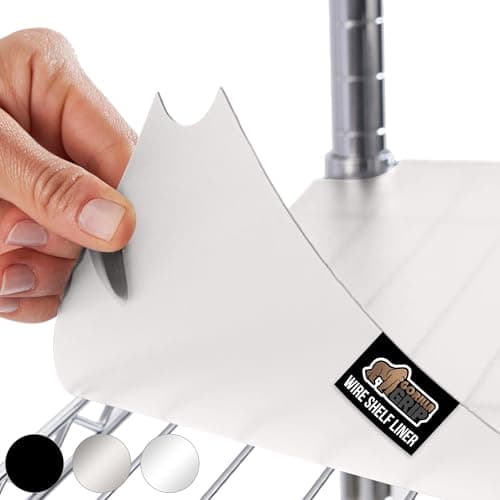
Gorilla Grip ShelfGuard Wire Shelf Liner, 14 x 36 inThe fix for the one real drawback of wire shelving in a linen closet, and the reason you can have ventilation and unmarked linen at the same time.
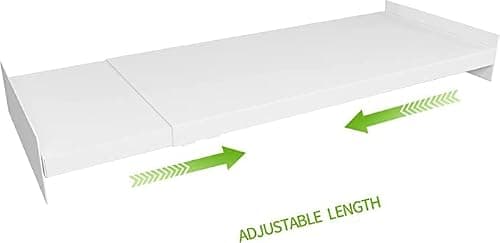
SOFRON Expandable Closet Shelf OrganizerAdds a shelf inside an existing gap without a single fixing, which is the whole answer for a rented linen closet with one enormous unused space.
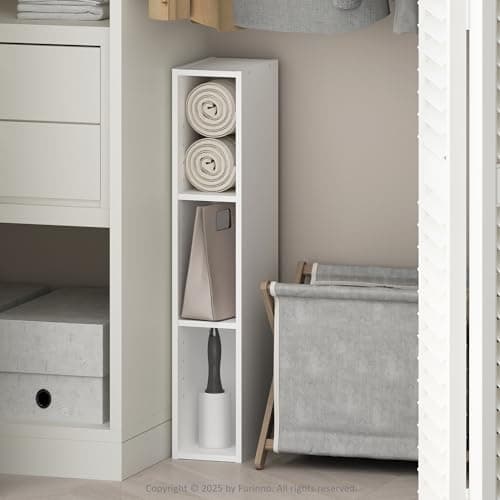
Furinno Reed 3-Tier Closet Organizer, Open ShelfStands on the floor and asks nothing of the wall, which is the right answer when the linen closet is narrow, rented, or built of something you cannot screw into.
Scores are our own, from the published rubric on the methodology page. They are editorial judgments about published specifications, not test results — we have not handled these units.
12 in and 16 inSource: ClosetMaid published product specifications
Maximum standard spacing
24 in apart, and no more than 4 in from the end of the shelfSource: ClosetMaid ShelfTrack Installation Tips
Published load
About 83 lb per bracket, up to 1,000 lb across a full systemSource: ClosetMaid Wire Shelving Specifications, rev 6/12
What the rating depends on
At least 3 screws into studs in the hang track and 3 in the middle standards. Fewer than that and the published figure does not apply.Source: ClosetMaid ShelfTrack Installation Tips
Adjustable after install
Yes — shelves move on the standards without re-drilling
What it gets right
Shelf heights change later without new holes in the wall
The hang track spreads load across studs rather than into single anchors
Widely stocked, so a replacement bracket is easy to find years from now
What it does not
The visible track and standards are not a design feature; some people hate the look
Rated capacity is entirely dependent on hitting studs, which older homes make harder
Who it is for
Anyone with a standard 24-inch-deep reach-in who expects the contents to change — a growing child's closet, a first apartment, a closet you are not sure about yet.
Skip this if
Your closet wall is masonry or plaster over brick. The published load figures assume wood studs, and anchor-only installs do not reach them.
02
Shelves without a rod
ClosetMaid Ventilated Wire Shelf Kit
The shelf-only kit, which is what a linen closet actually needs - almost every other closet kit ships a hanging rod you will never use.
Wire shelving; sits over the wires rather than adhering
Published load rating
Not applicable - it carries nothing itself
What it gets right
Stops the wire pattern embossing the bottom towel of a stack, which is the standard complaint about wire in a linen closet
Trimmable, so one set covers shelves of different widths
Non-adhesive, so it lifts out to wash and leaves nothing behind
What it does not
It reintroduces a solid surface, which is exactly the ventilation you chose wire to get - use it under the stacks that mark, not across every shelf
Clear plastic shows dust and looks tired before it fails
14 in deep suits a 12 or 14 in shelf; on a 16 in shelf it leaves a strip uncovered
Who it is for
A wire-shelved linen closet where folded towels sit long enough to take an impression.
Skip this if
Your linen closet runs damp. Covering the whole shelf removes the airflow that was keeping the stack dry, and a marked bottom towel is the lesser problem.
04
One tall gap you cannot drill into
SOFRON Expandable Closet Shelf Organizer
Adds a shelf inside an existing gap without a single fixing, which is the whole answer for a rented linen closet with one enormous unused space.
Freestanding inside the existing shelf gap. No fixings
Adjustability
Expandable width and adjustable shelf height
Published load rating
Not published by the manufacturer in a form we could verify in a form we could verify
Fits
An existing shelf gap tall enough to take a second level
What it gets right
No drilling at all, which is the constraint that rules out every other shelving option in a rental
Expandable width means it adapts to the closet rather than the closet adapting to it
Reversible - it lifts out and leaves nothing behind
What it does not
No published load figure, and stacked towels are heavier than they look
It stands on the shelf below, so it consumes some of that shelf's own usable height
Nothing anchors it, so a hard knock moves it
Who it is for
A rented linen closet, or one enormous shelf gap you do not want to drill for.
Skip this if
You can fix to the wall. A fixed wire shelf is stronger, publishes a load figure and does not eat into the shelf beneath it.
05
A linen cupboard with no usable wall
Furinno Reed 3-Tier Closet Organizer, Open Shelf
Stands on the floor and asks nothing of the wall, which is the right answer when the linen closet is narrow, rented, or built of something you cannot screw into.
Not published by the manufacturer in a form we could verify in a form we could verify
Surface
Solid shelf rather than wire, so no ventilation through the stack
What it gets right
Needs no studs, no anchors and no landlord conversation
Solid shelves mean no wire marking and no liner to buy
Narrow footprint suits the tall, shallow shape most linen cupboards actually are
What it does not
Solid shelves give you no airflow through the stack, which is the wrong direction for linen that goes away damp
No published load figure, and particle-core shelving sags under sustained weight in a way steel does not
Fixed tier spacing, so a tall towel stack and a short flannel stack get the same gap
Who it is for
A rented or awkward linen cupboard where fixing to the wall is not an option.
Skip this if
The closet runs damp or the linen goes away warm from the dryer. Solid shelves in a closed cupboard are how a linen closet starts to smell.
The liner question, answered properly
Wire shelving has one genuine drawback in a linen closet and it is not strength: the wire pattern embosses itself into the bottom item of a stack that sits for a season. The usual advice is to line the shelves, which works — and quietly undoes the ventilation you chose wire for in the first place.
So line selectively rather than completely. Put a liner under the stacks that genuinely mark and sit still — bath towels, spare bedding, the guest set nobody touches — and leave the fast-turnover shelves bare. Airflow where it matters, a flat surface where it matters, and you are not forced to choose one for the whole closet.
A trimmable non-adhesive liner is the right format because it lifts out to wash and can be cut to cover part of a shelf rather than all of it. The wider ventilation argument, and why it matters more in a linen closet than anywhere else, is on organizing a linen closet.
The stud problem, which is worse in a linen closet
ClosetMaid publishes about 83 lb per bracket and up to 1,000 lb across a full system, and both figures are conditional on at least three screws into studs in the hang track and three in the middle standards. That condition is harder to satisfy in a linen closet than in a bedroom one.
Linen closets are frequently narrow, often built into a hallway, and the back wall is sometimes a partition rather than a framed stud wall — so the studs are not where a 24 inch spacing limit wants them. Check before you buy: the compiled load figures and the condition attached to each are on shelf span and weight.
If the wall does not cooperate, that is not a failure — it is a different product category. A freestanding unit transmits load straight into the floor and has no stud requirement at all, which is why two of the five picks here need no wall.
Depth, and the shelf that swallows things
A 24 inch deep linen closet sounds generous and behaves badly. A folded bath towel is nowhere near 24 inches deep, so a deep shelf holds two rows and the back one is invisible from the door.
12 in suits flannels, toiletries and single rows of folded towels, with everything visible.
16 in is the general-purpose depth, and the deepest that stays fully reachable.
Over 16 in, use the back half deliberately — spare bedding and the guest set — or put a bin there that pulls out rather than a stack you reach past.
ClosetMaid publishes 12 and 16 inch depths across its wire ranges for exactly this reason, and the same back-row problem in a pantry is worked through on organizing deep pantry shelves.
Where each one is the right answer
You own the place and the wall has studs — adjustable wire track. It is the only option that lets you reset spacing when the contents change.
Same, but the layout is settled and the budget is tight — a fixed wire shelf kit. Same ventilation and published figures, no rod you do not need.
You rent, and there is one enormous unused gap — an expandable in-gap shelf. No fixings, fully reversible.
You rent, and the closet is narrow with no usable wall — a freestanding unit, accepting that solid shelves give you no airflow.
Wire is marking your towels — a trimmable liner under the slow-moving stacks only, not across the whole closet.
The closet already smells — fix that before buying shelving. It is a moisture and airflow problem, set out on why your closet smells musty.
What we are not telling you
We have not installed any of this shelving. The ClosetMaid load, depth and spacing figures are its own published numbers, cited at the foot of this page and conditional on screws into studs. The expandable and freestanding picks publish no load rating we could verify, and their entries say so rather than carrying an estimate — which is also why neither of them leads this page.
The stack heights referenced here are practical planning figures for ordinary household linen rather than manufacturer specifications, which is why this page sends you to fold and measure your own rather than trusting a table. Every price shown is live from the retailer at the moment you look. The method is on how we pick.
FAQ
Questions people ask about this
What is the best shelving for a linen closet?
Adjustable ventilated wire shelving, such as ClosetMaid ShelfTrack. Adjustability matters more in a linen closet than anywhere else because bath towels want 12 to 14 inches of gap and flannels want 8 to 10, and ventilation matters because linen frequently goes away warm or slightly damp.
How far apart should linen closet shelves be?
It depends on what sits on each one: roughly 12 to 14 inches for a stack of folded bath towels, 8 to 10 for hand towels and flannels, and something between for sheet sets. Fold your own stack and measure it — that number, not a standard, should set the gap.
Should linen closet shelves be wire or solid?
Wire, in most cases. Linen goes into the closet warm from the dryer or slightly damp more often than people admit, and open wire lets air move through the stack from below. The cost is that the wire pattern marks the bottom item of a stack left for a season.
How do you stop wire shelves marking towels?
Use a trimmable non-adhesive liner, but only under the stacks that actually sit still and mark — bath towels, spare bedding, the guest set. Lining every shelf removes the airflow you chose wire for, so line selectively rather than completely.
How deep should linen closet shelves be?
12 to 16 inches. ClosetMaid publishes both depths across its wire ranges. Past about 16 inches a shelf holds two rows of folded towels and the back one is invisible from the door, so use that depth deliberately for spare bedding or put a pull-out bin there.
Can you put shelving in a linen closet without drilling?
Yes, two ways. An expandable in-gap shelf stands inside an existing gap and adds a level with no fixings, and a freestanding unit stands on the floor and asks nothing of the wall. Both trade away the published load figures that wall-mounted systems give you.
How much weight can linen closet shelving hold?
ClosetMaid publishes about 83 lb per bracket for its wire ranges, conditional on at least three screws into studs. The freestanding and expandable products in this category publish no figure we could verify — which matters, because a stack of damp towels is heavier than it looks.
Availability check, 14 September 2026Every shelving product on this page was resolved through the Amazon Creators catalog on that date and carried a New buy-box offer at the time of writing.
What is not a source hereWe have not handled these products. Nothing on this page is a test result, and no figure comes from a retailer listing, another publisher, or memory.