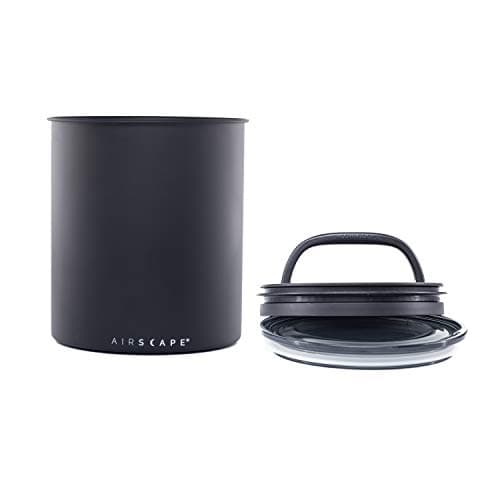
An airtight lid keeps new air out and does nothing about the air already inside. Three products here do something about that, and they do it three different ways.
By Scooter M.Published October 3, 2026Content updated October 3, 2026Prices verified October 3, 2026How we pick
Bin & Basket earns a commission when you buy through our links, at no extra cost to you. We are an Amazon Associate. We accept no free products, no sponsored placements and no paid inclusion, and commission rate plays no part in what we recommend. Full disclosure.
Decide which air problem you are solving, because the products solve different ones. Fresh beans give off carbon dioxide for days after roasting, and a sealed tin pressurizes - that wants a one-way valve, which the Coffee Gator and the STIFFOUR jar both have. Beans sitting in a half-empty tin are oxidizing in the air above them - that wants the air removed, which the Airscape does with a plunger and the Fellow Atmos does with a twist-pump vacuum. If the beans are supermarket bags that finished degassing weeks ago, a plain opaque tin like the Veken is enough.
Almost every listing in this category says airtight. Airtight is the baseline, not the feature - what separates these products is what they do about the air that is already in the container.
The three mechanisms
What each container does about air
Product
Mechanism
Capacity
Opaque?
Airscape
Plunger lid with two-way valve - pushes air out as it is pressed down
2.2 lb
Yes
Fellow Atmos
Twist-pump vacuum - removes air from the sealed canister. Whole beans only, per the listing
0.7 L
No - clear glass in this variant
Coffee Gator
One-way valve - vents CO2 out, lets nothing back in
11 oz
Yes
STIFFOUR
One-way valve, plus a date tracker on the lid
About 13 oz
No - clear glass
Veken
Airtight lid only, with a viewing window
22 oz
Mostly
Mechanisms and capacities as published by the sellers on their listings, retrieved 3 October 2026. No product in this category publishes an independently tested freshness duration, a vacuum level or a hold time, and none is quoted here.
A one-way valve solves degassing. Freshly roasted beans release carbon dioxide, which is why a fresh bag puffs up. The valve lets it out without letting oxygen in.
A plunger solves headspace. As the tin empties, the air above the beans grows; pushing an inner lid down to the bean level removes it.
A vacuum solves both at once, by taking air out of a sealed container. It is the most thorough and the most expensive mechanism here.
An airtight lid alone solves neither. It is still better than the bag clipped shut, and it is what most of the category sells.
Light, and why clear jars are a compromise
Light degrades coffee, which is why specialty roasters ship in opaque bags rather than clear ones. That makes the clear glass jar here a genuine compromise: it has the valve, it lets you see the beans and date them, and it gives light free access to the contents.
The resolution is simply where it lives. In a dark cupboard, a glass jar is fine and the visibility is a real convenience. On a sunlit counter, buy steel. The window on the Veken is the middle position - a small area of glass in an otherwise opaque body, which lets you see the level without exposing the whole batch.
Capacity against the bag you actually buy
The standard specialty bag in the US is 12 oz, and the capacities here are quoted in coffee weight rather than volume, which makes the comparison easy and slightly unflattering.
11 oz holds less than one standard bag. The Coffee Gator is a good canister that leaves a little in the bag, which is worth knowing before you buy it.
13 to 22 oz takes one bag comfortably, which is the sweet spot for most households and where the STIFFOUR and Veken sit.
0.7 L is roughly one bag of whole beans, though the figure is quoted in volume rather than weight, so a dense dark roast fills it faster than a light one.
2.2 lb is bulk. The Airscape kilo size is for people buying by the kilo, and it is exactly where a plunger earns its keep, because the headspace problem grows with the container.
How this page is ranked
What it does about air, in the order above: vacuum, then plunger, then valve, then sealed lid.
Opacity, because light is the second degradation path and the cheapest one to avoid.
Capacity against a standard 12 oz bag, since a canister that takes most of a bag is an irritation every single time.
Cleanability. Coffee oils go rancid, and a mechanism in the lid is a mechanism to degrease.
What is published. Nothing in this category publishes tested freshness figures, so mechanism and materials are what can be judged.
#
Product
Best for
Score
Price
01
Airscape Airscape Coffee Canister, 2.2 lbAn inner plunger with a two-way valve that forces the air out as you press it down, which addresses the thing an airtight lid cannot: the oxygen already in the tin.
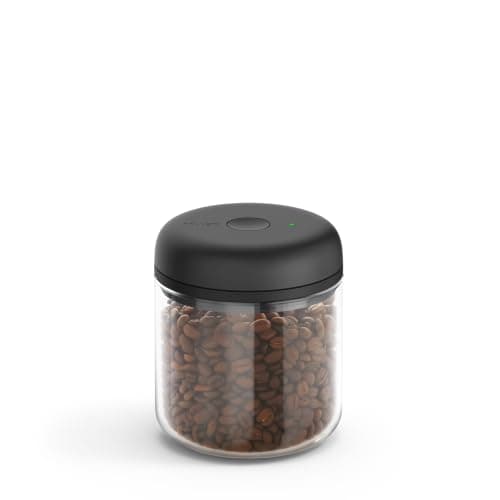
Fellow Atmos Vacuum Canister, Clear Glass, 0.7 LTwist the lid and it draws air out of the canister. It is the most thorough mechanism here - and its own listing rules out ground coffee, which is an unusually honest limitation.
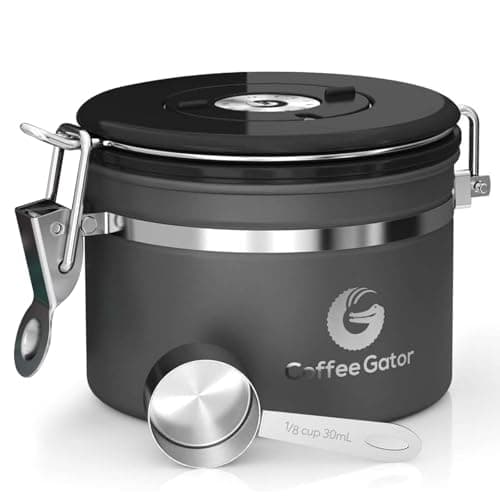
Coffee Gator Stainless Steel Coffee Canister, 11 ozA one-way freshness valve in a steel tin, which is the mechanism that matters for freshly roasted beans and the cheapest way here to get it.
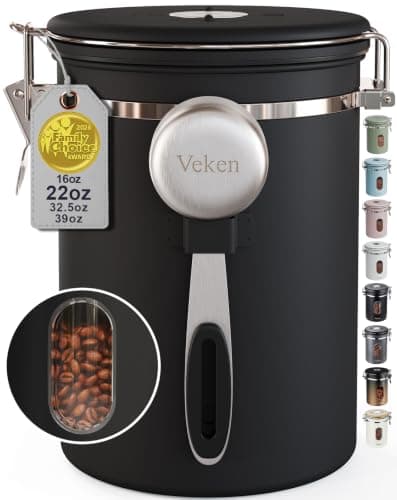
Veken Stainless Steel Coffee Canister with Window, 22 ozSteel with a small window, which is the compromise between an opaque tin you cannot see into and a glass jar that lets light at everything.
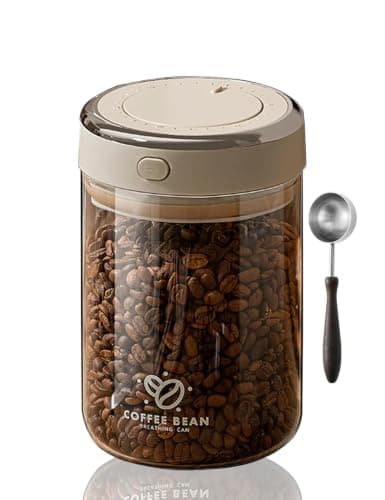
STIFFOUR Glass Coffee Container with One-Way ValveBorosilicate glass with a one-way valve and a date tracker on the lid, which is the only product here that addresses the question of how old the coffee is.
Scores are our own, from the published rubric on the methodology page. They are editorial judgments about published specifications, not test results — we have not handled these units.
01
Pushing the air out, not just sealing it in
Airscape Airscape Coffee Canister, 2.2 lb
An inner plunger with a two-way valve that forces the air out as you press it down, which addresses the thing an airtight lid cannot: the oxygen already in the tin.
2.2 lb of coffee, about 1 kgSource: Retailer catalog listing, retrieved 3 October 2026
Mechanism
Patented inner plunger lid with a two-way valve that forces excess oxygen outSource: Retailer catalog listing, retrieved 3 October 2026
Size
About 7.2 x 7.2 x 8 inSource: Retailer catalog listing, retrieved 3 October 2026
Opacity
Opaque bodySource: Retailer catalog listing, retrieved 3 October 2026
Independent freshness testing
Not published by the manufacturer in a form we could verify
What it gets right
The plunger reduces the air sitting on the beans as the tin empties, which a fixed lid cannot do
A two-way valve lets roasting gases escape without letting air back in
Opaque steel, so light is not degrading the beans through a window
What it does not
Two moving parts in a coffee tin is two things to clean oil off
The most expensive non-electric option here
No independent freshness testing is published, by this brand or any rival
Who it is for
Anyone buying coffee by the kilo who wants the air volume to shrink with the beans.
Skip this if
You buy coffee weekly in small bags. The plunger earns its money on a kilo that sits for a month.
02
An actual vacuum, by twisting the lid
Fellow Atmos Vacuum Canister, Clear Glass, 0.7 L
Twist the lid and it draws air out of the canister. It is the most thorough mechanism here - and its own listing rules out ground coffee, which is an unusually honest limitation.
0.7 literSource: Retailer catalog listing, retrieved 3 October 2026
Mechanism
Twist the lid back and forth to remove air from inside, per the listingSource: Retailer catalog listing, retrieved 3 October 2026
Body
Clear glass in this variant, with a stainless steel lidSource: Retailer catalog listing, retrieved 3 October 2026
Stated limitation
Whole bean coffee only - the listing warns that ground coffee and fine particles may clog the valveSource: Retailer catalog listing, retrieved 3 October 2026
Size
About 4.33 x 4.33 x 5.59 inSource: Retailer catalog listing, retrieved 3 October 2026
Published vacuum level or hold time
Not published by the manufacturer in a form we could verify
What it gets right
Removes air rather than just sealing the lid, which is the whole problem with coffee storage
States plainly what it is not for, which almost nothing in this category does
Works for tea, spices and nuts too, so it is not a single-purpose gadget
What it does not
Ground coffee is ruled out by the seller - fine particles can clog the valve
This variant is clear glass, so it needs a dark cupboard rather than a sunny counter
No vacuum level or hold duration is published, and 0.7 L will not take a 2 lb bag
Who it is for
Whole beans, a 12 oz bag at a time, stored in a cupboard rather than on display.
Skip this if
You buy ground coffee. The listing itself says the valve is for whole beans only.
03
A valve at a sensible price
Coffee Gator Stainless Steel Coffee Canister, 11 oz
A one-way freshness valve in a steel tin, which is the mechanism that matters for freshly roasted beans and the cheapest way here to get it.
22 ozSource: Retailer catalog listing, retrieved 3 October 2026
Body
Stainless steel with a viewing windowSource: Retailer catalog listing, retrieved 3 October 2026
Size
About 5.3 x 5.3 x 7.5 inSource: Retailer catalog listing, retrieved 3 October 2026
Mechanism
Airtight lid; no one-way valve stated
Published freshness duration
Not published by the manufacturer in a form we could verify
What it gets right
22 oz takes a full 12 oz bag with room, or most of a 1.5 lb bag
A window shows the level without opening the tin, which is when air gets in
Mostly opaque, so only a small area of beans ever sees light
What it does not
No one-way valve stated, so freshly roasted beans will pressurize it
The window is a seal and a scratch point, and it will cloud with coffee oil
An airtight lid alone does nothing about the air volume above the beans
Who it is for
Supermarket beans or ground coffee, where degassing is finished and capacity matters more.
Skip this if
You buy coffee within days of roasting. Beans that are still degassing want a valve.
05
Seeing the beans, and dating them
STIFFOUR Glass Coffee Container with One-Way Valve
Borosilicate glass with a one-way valve and a date tracker on the lid, which is the only product here that addresses the question of how old the coffee is.
About 13 ozSource: Retailer catalog listing, retrieved 3 October 2026
Mechanism
One-way valve to discharge carbon dioxideSource: Retailer catalog listing, retrieved 3 October 2026
Material
High-transparency borosilicate glassSource: Retailer catalog listing, retrieved 3 October 2026
Date tracker
Built into the lidSource: Retailer catalog listing, retrieved 3 October 2026
Opacity
None - it is clear glass
What it gets right
A date tracker, so the roast date does not disappear with the bag
Glass does not hold coffee oils or odors the way plastic does
A valve at the lowest price on this page
What it does not
Clear glass lets light at the beans, and light degrades coffee - keep it in a cupboard, not on the counter
13 oz is one bag, no more
Glass in a kitchen is glass in a kitchen
Who it is for
A cupboard-stored bag where knowing the roast date matters more than blocking light.
Skip this if
The canister will live on an open counter in a sunny kitchen. Buy steel and keep the glass for a dark cupboard.
Ground coffee is a different problem
Everything above is written for whole beans. Ground coffee has vastly more surface area exposed to air, it stales in days rather than weeks, and no canister on this page changes that meaningfully.
One listing here goes further and rules it out: the Fellow Atmos states whole bean coffee only, because ground coffee and other fine particles may clog its valve. If you buy ground, the honest advice is to buy small amounts often, keep it in the most airtight thing you own, and not spend heavily on a vacuum canister whose benefit is measured over weeks you do not have. The mechanism that matters most for ground coffee is the lid seal, which makes the plain airtight tins perfectly reasonable buys.
Where not to keep it
Not the freezer, if you open it repeatedly. Each trip in and out condenses moisture onto cold beans. Freezing a sealed, unopened portion is a different thing and is defensible; a bag you dip into daily is not.
Not above the oven. Heat accelerates everything that goes wrong with coffee, and the cupboard above a cooker is the warmest in the kitchen.
Not on a sunny counter in a clear jar, for the reasons above.
Not in the bag with a clip, if you care. A folded bag has air in it and lets more in every time it is opened - it is the baseline all of these products improve on.
Where the canister lives
A good canister in a bad spot is worse than a plain one in a good spot, because heat and light do more damage than a slightly imperfect seal.
Not above or beside the oven. It is the warmest cupboard in the kitchen, and heat accelerates every process that stales coffee.
Not on a sunny counter in glass. The clear jar here is a good container in a dark cupboard and a poor one in direct light.
An interior cupboard at room temperature is the practical best in most kitchens, and it is free.
Not next to spices or anything strongly aromatic. Coffee picks up smells, which is also why a canister that previously held something fragrant is a bad reuse.
The other reason cupboard storage wins: it removes the temptation to leave the lid off. Every one of these mechanisms depends on the container being closed, and a canister sitting beside the grinder on a counter gets opened and left open far more often than one you have to reach for.
Buying beans to match the container
The container is the smaller half of this. What you buy and how fast you drink it matters more than any lid mechanism, and the two decisions interact.
Check the roast date, not the best-before. A best-before date a year out tells you nothing; a roast date tells you where in its life the coffee is. This is the one thing the jar with a date tracker on the lid is trying to solve.
Buy about two weeks' worth at a time. Whole beans are at their best in the window after degassing and before staling, and buying a kilo to fill a large canister is working against yourself.
Buy whole beans if you can grind them. Ground coffee has far more surface area exposed to air and stales in days, which no canister on this page meaningfully changes.
Match the canister to the bag. A standard 12 oz bag wants a 13 to 22 oz canister. If you do buy by the kilo, buy the plunger canister, because the headspace problem is what gets worse at that size.
Cleaning, and why coffee oils matter
Coffee leaves oil on everything it touches, and that oil goes rancid. It is the reason a canister that has held coffee for a year can make fresh beans taste stale, and it is the maintenance job none of these listings talks about.
Wash the canister between bags, not between years. Warm water and detergent is enough; the point is frequency rather than intensity.
Dry it completely before refilling. Residual water in a sealed canister is worse than the air you were trying to remove.
Pay attention to the mechanism. A valve, a plunger seal or a vacuum pump has crevices a plain lid does not, and those crevices are where oil accumulates. This is the real cost of the clever lids on this page.
Do not put a mechanism lid in a dishwasher unless the listing says you can. Heat and detergent degrade gaskets, and a degraded gasket turns an airtight canister into an expensive tin.
Glass shows you when it is time. The film on the inside of a clear jar is the same film on the inside of a steel one, where you cannot see it.
The broader point: every mechanism here adds a part, and every part is something to keep clean. A plain airtight tin is the easiest thing in this category to maintain, which is a genuine argument for it if the coffee is turning over quickly anyway.
If it helps to rank the variables, the honest hierarchy is this: how fresh the coffee was when you bought it, how fast you drink it, where the container sits, and only then which mechanism the lid uses. The canisters on this page address the last of those, which is the smallest of the four - worth getting right, and not worth agonizing over.
Two edge cases worth knowing: decaf and flavored beans both behave slightly differently in storage. Decaf is generally more fragile after roasting, and flavored coffees carry oils that transfer to the container and linger - so if you drink both, keep a separate canister for the flavored beans rather than alternating them through one, because the previous flavor will follow the next bag into the cup.
What we are not telling you
We have not run a tasting, a staling comparison or a seal test. Every capacity, mechanism and material here is published by the seller or listed in the retailer catalog, retrieved on 3 October 2026, and each card labels it that way.
No product in this category publishes an independently tested freshness duration, a vacuum level or a hold time, so none appears on this page - and claims of the form keeps coffee fresh for weeks should be read as marketing in every case, including on the products we rank highest. The mechanism descriptions are physics and the sellers' own descriptions of their lids, not measurements. Prices are live from the retailer at the moment you look. The method is on how we pick.
FAQ
Questions people ask about this
What is the best way to store coffee beans?
Airtight, opaque and at room temperature, in an amount you will finish in about two weeks. If the beans are freshly roasted, a one-way valve matters because they are still releasing carbon dioxide. If the container will sit half empty, a plunger or vacuum mechanism removes the air above the beans, which a plain lid cannot.
Do coffee canisters really keep coffee fresher?
The mechanisms are real - a valve vents CO2, a plunger displaces headspace air, a vacuum removes it. What no manufacturer publishes is an independently tested freshness duration, so treat specific day counts as marketing. The largest single factor remains buying an amount you drink quickly.
What is a one-way valve for on a coffee container?
Freshly roasted beans give off carbon dioxide for days, which is why a fresh bag inflates. A one-way valve lets that gas escape without letting oxygen back in. If you buy within a week or two of the roast date, it is the feature to look for.
Should coffee be stored in glass or steel?
Steel, if the container sits anywhere light reaches, because light degrades coffee. Glass is fine in a dark cupboard and has the advantage that you can see what you have. A steel canister with a small window is the compromise between the two.
Can you store coffee in the freezer?
A sealed portion you do not open repeatedly is defensible. A bag you take in and out daily is not, because moisture condenses onto the cold beans each time. For everyday coffee, an opaque airtight container at room temperature is the simpler and safer answer.
What size coffee canister do I need?
Match a standard 12 oz bag, so 13 to 22 oz is the practical range for most households. An 11 oz canister leaves a little in the bag every time. A 2.2 lb canister only makes sense if you buy by the kilo, and that is also where a plunger mechanism earns its money.
Sources
Where these figures come from
Product figures, as listed in the retailer catalog (3 October 2026)Dimensions, capacities, published loads, materials and any stated fit requirement for every product added in this expansion, taken from the Amazon catalog and the sellers' own listing text through the Creators API on 3 October 2026. These are listing figures rather than manufacturer specification sheets, and each row is labeled that way. Coverage and clearance figures derived from them are our own arithmetic and are labeled as ours.
Availability check, 3 October 2026Every product added in this expansion was resolved through the Amazon Creators catalog on that date and carried a New buy-box offer at the time of writing. Products without a current offer were excluded before the pages were written.
What is not a source hereWe have not handled these products. Nothing on this page is a test result, and no figure comes from a retailer listing, another publisher, or memory.