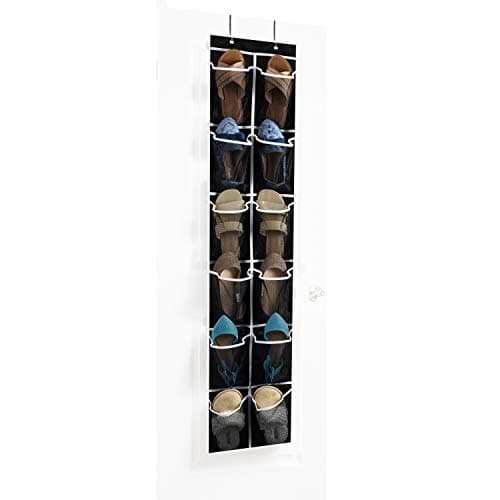
The back of the door is the last unused surface in most closets. And if the door itself is the problem, hardware is usually the fix.
By Scooter M.Published September 1, 2026Content updated September 1, 2026Prices shown live on AmazonHow we pick
Bin & Basket earns a commission when you buy through our links, at no extra cost to you. We are an Amazon Associate. We accept no free products, no sponsored placements and no paid inclusion, and commission rate plays no part in what we recommend. Full disclosure.
Use the back of the door if it is a solid hinged door, fix the hardware if it is a bifold that sticks, and take the door off entirely if the mechanism has beaten you. Over-door storage needs a top edge to hook over, which bifold and sliding doors do not have. Bifold failures are nearly always the pivots, guides and rollers rather than the door, and those cost a fraction of a replacement.
One thing this page does not cover is replacement door slabs. Bifold and sliding door panels are oversized freight items with poor availability and high return rates, so there is nothing here we can honestly recommend buying online. If you need a new slab, buy it in a store where you can carry it home.
#
Product
Best for
Score
Price
01
No imageSimple Houseware Over-the-Door Wire Storage RackRigid wire baskets on a door bracket, which is what you want when the fabric-pocket version keeps sagging.
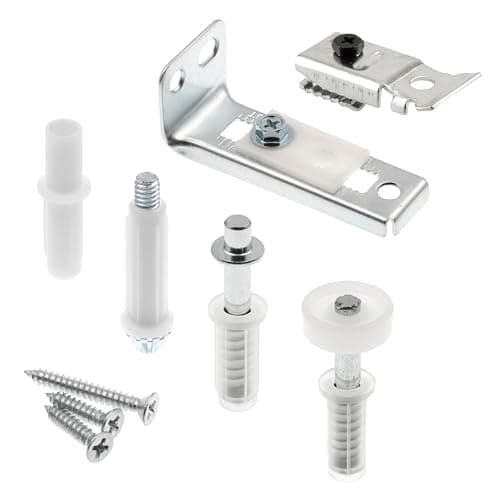
Prime-Line Bifold Door Repair Hardware SetPivots, guides and top rollers wear out long before the door does — replacing them costs a fraction of a new door.
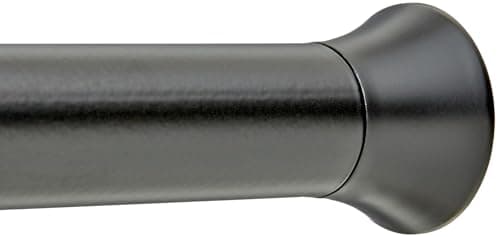
Amazon Basics Tension Curtain RodThe honest answer to a broken bifold: take the doors off, put a curtain across the opening, and stop maintaining a mechanism.
Scores are our own, from the published rubric on the methodology page. They are editorial judgments about published specifications, not test results — we have not handled these units.
01
No image
Door-mounted storage that holds weight
Simple Houseware Over-the-Door Wire Storage Rack
Rigid wire baskets on a door bracket, which is what you want when the fabric-pocket version keeps sagging.
Spring tension inside the door opening, or bracket-mounted above it
Opening requirement
Two opposing jambs for a tension fit; a header for a bracket fit
What it replaces
A bifold or sliding door assembly, track and hardware
What it gets right
Nothing to jump the track, ever again
The full opening is usable, with no door leaf eating the sides
Reversible: the doors go back on if you sell the house
What it does not
A curtain does not contain dust or smell the way a door does
Tension rods on a wide opening are exactly the failure case described above
Who it is for
Anyone with a bifold door that has come off its track more than twice.
Skip this if
The opening is over about five feet and you are using tension rather than brackets. Bracket-mount it into the header instead.
What fits which door
Door type decides the option
Door type
Over-door storage
Hardware repair
Remove and curtain
Solid hinged
Yes — the door it is designed for
Hinges rarely fail
Possible, but you would be removing a working door
Bifold
No top edge to hook over
Yes — pivots, guides and rollers are the usual failure
Yes — the classic fix for a door that keeps jumping
Sliding / bypass
No
Rollers and track, usually
Yes, and it recovers the panel overlap
No door
No
—
Already there
The 'no top edge' constraint is the single biggest determinant here and the most common reason an over-door organizer is returned.
Measuring for over-door storage
Two clearances matter and people check neither:
Behind the closed door. The organizer plus its contents must fit between the door leaf and the front edge of whatever is inside — the shelf edge, the hanging clothes, the frame. If the closet is full to the door, the organizer will not let it close.
At the top of the door. The hooks add thickness at the top edge, and on a tight frame the door will no longer close flush against its stop.
In front of the open door, if the door swings into a wall or another door. An organizer full of shoes turns a door into a much wider object.
Fixing a bifold instead of replacing it
A bifold that drags, sticks or jumps its track is almost always a hardware failure: the top pivot, the bottom pivot, the guide wheel, or the track itself. Those parts wear out on a schedule; the door leaf does not.
Measure the existing pivot before ordering. Bifold hardware sizes are not fully standardized, and the wrong pivot diameter is a wasted order.
Replace pivots in pairs. If one has worn out the other is close behind.
Check the track for a kink while you are there. A bent track defeats new hardware.
If the leaf itself is warped or delaminating, stop. New hardware on a bent door still binds, and that is the case where removing it and hanging a curtain is genuinely the better answer.
A door face will also take a mirrored jewelry cabinet, which is the only lockable storage in that category - and about 20 lb hanging on the door. It is compared against the drawer and rod options on best jewelry organizers for a closet.
Caps are the other thing a door face takes well: an over-door cap rack holds up to 36 of them and costs no shelf or rod at all. The formats, and what each capacity claim actually works out to, are on best hat storage for a closet.
A door face will also take wrapping supplies, and the over-door units are tall enough for long rolls standing up. The formats are compared on best wrapping paper storage.
What to put on a door
Rigid wire baskets for anything with weight — tins, bottles, cleaning supplies. Fabric pockets stretch under these.
Fabric pockets for shoes and small light items, where the visibility of an open pocket helps.
A spice rack, if it is a pantry door. That one frees a whole shelf — see spice racks.
Not heavy or valuable items. A door swings, and anything on it is subject to that movement every time.
The back of a closet door is also where tie and belt racks go, and the figure that decides whether the door still shuts is projection. Only one rack in that category publishes it, at 2.38 in - the comparison is on best tie and belt racks. The same door-thickness question governs the over-door broom hardware on best broom and mop holders.
FAQ
Questions people ask about this
Can you put an organizer on a bifold closet door?
Not an over-door one. They hook over a door's top edge, and bifold and sliding doors have no usable top edge. On a bifold you are limited to screw-fixed racks on the panel, and even then the door's movement and the panel thickness constrain what will work.
How do you fix a bifold door that keeps coming off the track?
Replace the hardware, not the door. The top pivot, bottom pivot and guide wheel wear out long before the leaf does, and a repair set costs a fraction of a new door. Measure the existing pivot before ordering, because bifold sizes are not fully standardized.
What can you do instead of closet doors?
Hang a curtain across the opening. You get the full width with no panel overlap and no mechanism to maintain, and it is fully reversible. What you give up is dust protection and the ability to shut a mess out of sight.
Do over-the-door organizers stop the door closing?
On a tight frame, yes. The hooks add thickness at the top edge and the organizer plus its contents needs clearance between the door and whatever is inside the closet. Measure both before ordering.
Why does this page not recommend replacement closet doors?
Bifold and sliding door slabs are oversized freight items with thin online availability and high return rates. There is nothing we could honestly recommend buying online, so we do not. Buy a slab somewhere you can carry it home from.
Sources
Where these figures come from
What is not a source hereWe have not handled these products. Nothing on this page is a test result, and no figure comes from a retailer listing, another publisher, or memory.