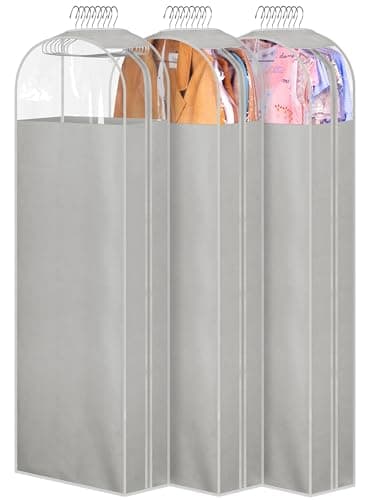
Three figures decide this: how long the bag is, how deep its gusset is, and whether it lets moisture out. The third one is where plastic fails.
By Scooter M.Published October 3, 2026Content updated October 3, 2026Prices verified October 3, 2026How we pick
Bin & Basket earns a commission when you buy through our links, at no extra cost to you. We are an Amazon Associate. We accept no free products, no sponsored placements and no paid inclusion, and commission rate plays no part in what we recommend. Full disclosure.
Measure the garment on its hanger, then buy the bag that clears it and breathes. For gowns and full-length coats, the MISSLO bags are 60 inches with a 10-inch gusset - the only combination here that takes a long dress without folding the hem inside. For suits and jackets, the KIMBORA 43-inch bags state about four suits each. For wool going away for a season, the cotton bag is the only one here with a stated fiber content. Clear plastic bags are the cheapest by far, and they are the wrong choice for anything stored longer than a few weeks.
This is a category where the cheap option is genuinely fine for one job and genuinely harmful for another, and the listings rarely make the distinction.
Length, measured on the hanger
Garment bags are sold by length, and the number has to beat your garment measured from the top of the hanger hook to the hem - not the garment alone.
40 to 43 in covers suits, jackets, shirts and most knee-length dresses. This is where most of the category sits.
54 in covers long coats and most evening dresses.
60 in is for gowns, wedding dresses and full-length coats. The 60 in bag here is the only one on the page that will take them without the hem folding back on itself.
A folded hem is the thing to avoid. A crease set into silk or satin over a season does not hang out, which is the whole reason to buy for length rather than price.
There is a ceiling on this, and it is your closet. A 60 inch bag needs about 60 inches of clear hanging space below the rod, and a standard single rod at 66 to 68 inches gives you that only if nothing is on the floor beneath it. The rod heights to check against are on reach-in closet dimensions.
The gusset is what decides capacity
A gusset is the depth panel down the side of the bag. A flat bag takes one or two garments; a gusseted bag takes a stack, and the depth of the gusset tells you how big a stack.
Published length, gusset and capacity
Bag
Length
Gusset
Stated capacity
Material
MISSLO
60 in
10 in
About 10 dresses per bag
Breathable fabric
KIMBORA
43 in
4 in
About 4 suits or 8 shirts per bag
Breathable fabric
BigLotBags cotton
42 in
Not published
Not published
100% cotton, stated
ZARLOO
40 in
Not published
Not published
Breathable, dust-proof
Perber clear
40 in
None - flat
Not published
Clear plastic
Figures as published by the sellers on their listings, retrieved 3 October 2026. Only one bag publishes a fiber content; the rest say breathable without naming a fabric. Capacity claims are the sellers' and assume garments are not compressed.
Note how the two capacity claims scale with the gusset: 4 inches of depth for about four suits, 10 inches for about ten dresses. That is roughly an inch of gusset per garment, which is a useful sanity check when a listing claims a count without publishing a depth.
Breathable or plastic, and when each is right
This is the decision that matters most and the one the price tag pushes you to get wrong. Plastic garment bags are a fraction of the cost of fabric ones, and for the job dry cleaners use them for - getting a garment home clean - they are perfect.
For weeks, plastic is fine. It keeps dust and hair off, you can see what is inside, and nothing has time to go wrong.
For a season, plastic is a risk. It does not pass moisture. A garment put away with any dampness in it, or stored in a closet that gets humid, sits in that moisture against the fiber.
Natural fibers care most. Wool, cashmere and silk want air movement. Cotton and breathable non-woven bags give them that while still excluding dust.
A sealed bag is not moth protection either. If larvae are already in the garment, sealing it in is the opposite of helpful - the full picture is on clothes moths in a closet.
The honest summary: buy plastic for the trip home from the cleaner and for short rotations, and buy fabric - ideally cotton - for anything going away until next winter. The off-season decision in full, including the vacuum-bag question, is on best off-season clothes storage.
How this page is ranked
Published length, because a folded hem is permanent damage and length is the figure that prevents it.
Gusset depth, which is what capacity claims actually rest on.
Breathability, by stated material. A named fiber beats the word breathable, and only one bag here names one.
Closure and hanger access. A top hole that drops over hangers on the rod beats unhooking everything.
Pack size against the job. Three bags does a seasonal rotation; twelve does a wardrobe.
#
Product
Best for
Score
Price
01
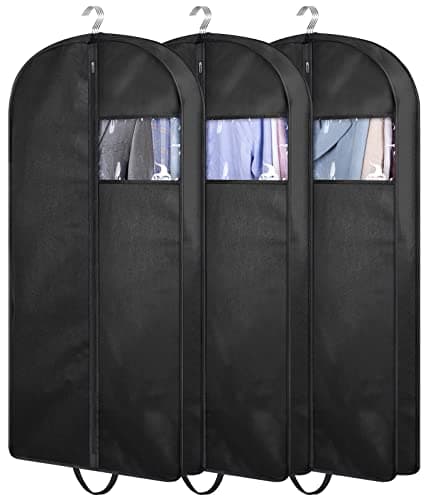
MISSLO 60 in Gusseted Garment Bags, 3-PackSixty inches long with 10-inch gussets, which is the only combination here that takes a full-length dress without folding the hem up inside the bag.
KIMBORA 43 in Gusseted Suit Bags, 3-PackForty-three inches with 4-inch gussets and an unusually specific claim - about four suits or eight shirts per bag - which is the kind of figure this category rarely gives.
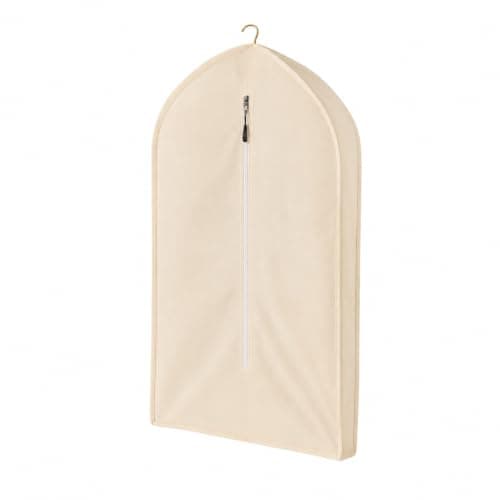
BigLotBags 100% Cotton Garment Bag, 42 inThe only bag here with a stated fiber content rather than an unnamed breathable fabric, and cotton is the material you want touching wool for a season.
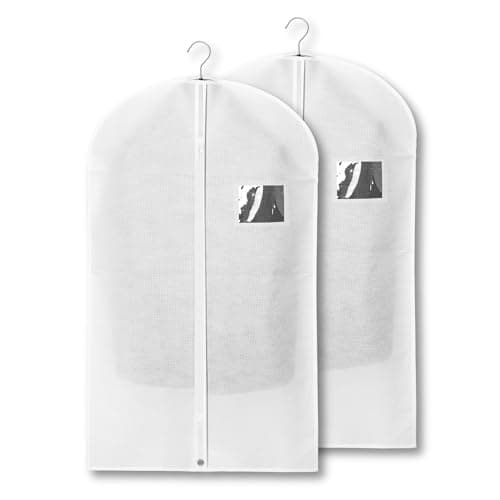
ZARLOO Breathable Garment BagsBreathable is the operative word - a sealed plastic bag traps moisture against wool, which causes a different problem from the one you were solving.
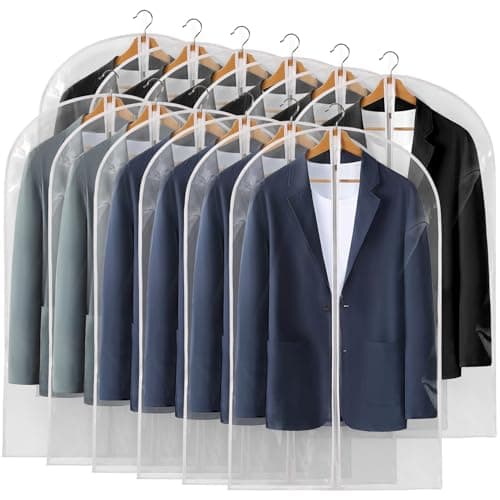
Perber 40 in Clear Garment Bags, 12-PackTwelve clear bags for the price of three fabric ones. They are the right answer for short-term dust protection and the wrong one for storing wool all summer.
Scores are our own, from the published rubric on the methodology page. They are editorial judgments about published specifications, not test results — we have not handled these units.
01
Gowns and full-length coats
MISSLO 60 in Gusseted Garment Bags, 3-Pack
Sixty inches long with 10-inch gussets, which is the only combination here that takes a full-length dress without folding the hem up inside the bag.
60 in - the longest hereSource: Retailer catalog listing, retrieved 3 October 2026
Gusset
10 in, so the bag has depth rather than lying flatSource: Retailer catalog listing, retrieved 3 October 2026
Stated capacity
About 10 dresses per bag, per the listingSource: Retailer catalog listing, retrieved 3 October 2026
Material
Breathable fabric, per the listingSource: Retailer catalog listing, retrieved 3 October 2026
Pack
3 bagsSource: Retailer catalog listing, retrieved 3 October 2026
What it gets right
60 in clears a full-length gown, where the common 40 and 43 in bags fold it
A 10 in gusset means the bag holds several garments without compressing them flat
Breathable rather than sealed plastic, which is what long-term wool and silk need
What it does not
60 in needs a tall closet - in a standard reach-in, the bag will touch the floor or the shelf above
Ten dresses in one bag is a heavy, bulky unit to move on a single hanger hook
No fabric weight or weave is published, so breathable is the seller's word rather than a figure
Who it is for
Wedding dresses, gowns and long coats in a closet with full-height hanging.
Skip this if
Your rod sits at a standard 66 to 68 in. A 60 in bag leaves almost nothing between the hem and the floor.
02
Suits, with a stated garment count
KIMBORA 43 in Gusseted Suit Bags, 3-Pack
Forty-three inches with 4-inch gussets and an unusually specific claim - about four suits or eight shirts per bag - which is the kind of figure this category rarely gives.
43 inSource: Retailer catalog listing, retrieved 3 October 2026
Gusset
4 inSource: Retailer catalog listing, retrieved 3 October 2026
Stated capacity
About 4 suits or 8 shirts per bag; 12 suits across the 3-packSource: Retailer catalog listing, retrieved 3 October 2026
Material
Breathable fabric with a hanger hole in the topSource: Retailer catalog listing, retrieved 3 October 2026
Pack
3 bagsSource: Retailer catalog listing, retrieved 3 October 2026
What it gets right
States a garment count per bag rather than leaving capacity to the photograph
43 in suits jackets and most coats without the wasted length of a 60 in bag
A top hanger hole, so the hangers stay on the rod and the bag drops over them
What it does not
A 4 in gusset is shallow - four suits in it will be pressed together, whatever the claim
43 in is too short for a gown or a full-length coat
No fabric specification beyond the word breathable
Who it is for
Suits, jackets and shirts that need dust protection in a normal reach-in closet.
Skip this if
You are storing full-length garments. Measure the longest one on its hanger first.
03
Natural fiber against natural fiber
BigLotBags 100% Cotton Garment Bag, 42 in
The only bag here with a stated fiber content rather than an unnamed breathable fabric, and cotton is the material you want touching wool for a season.
Breathable fabric lets wool release moisture instead of holding it against the fibers
A physical barrier that stops an adult moth reaching the garment to lay on it
Keeps dust off shoulders, which is the other thing that ruins stored coats
What it does not
A bag is only a barrier - eggs already in the garment are now sealed in with it
Zips are the failure point and a half-open bag protects nothing
Takes rod length, which a small closet may not have
Who it is for
Wool coats and suits going into storage for a season, after cleaning.
Skip this if
The garment has not been cleaned first. Bagging an unwashed wool coat seals the larvae's food supply in with them.
05
Seeing what is inside, short term
Perber 40 in Clear Garment Bags, 12-Pack
Twelve clear bags for the price of three fabric ones. They are the right answer for short-term dust protection and the wrong one for storing wool all summer.
40 x 24 inSource: Retailer catalog listing, retrieved 3 October 2026
Material
Clear plasticSource: Retailer catalog listing, retrieved 3 October 2026
Stated use
Suits, sweaters, winter coats and jackets, per the listingSource: Retailer catalog listing, retrieved 3 October 2026
Pack
12 bagsSource: Retailer catalog listing, retrieved 3 October 2026
Breathability
None - plastic does not pass moisture
What it gets right
You can see the garment without opening anything, which is why dry cleaners use the format
Twelve bags covers a whole wardrobe at the lowest cost per bag here
40 in handles suits and most coats
What it does not
Plastic traps moisture against the fiber, which is how stored wool ends up musty or mildewed
It is also what makes a sealed bag attractive to a moth larva that is already in the garment
Thin plastic tears at the hanger hole once it has been opened a few times
Who it is for
Short-term dust protection, off-season rotation within the same closet, or clothes coming back from the cleaner.
Skip this if
The clothes are going away for a season. Use breathable fabric or cotton for anything stored longer than a few weeks.
Before the garment goes in the bag
A garment bag preserves the state of what you put in it. Three things are worth doing first, and none of them costs anything.
Clean it. Body oils and food traces are what attract moths and what set into permanent stains over months. This matters far more than the bag you choose.
Dry it completely. Anything put away damp will be worse in a sealed bag and bad enough in a breathable one.
Give it the right hanger. A wire hanger under a heavy coat for six months puts a permanent shoulder bump in it. The hanger-by-garment guidance is on best hangers by garment.
Leave the bag slightly open at the bottom if it is plastic and the garment is natural fiber. It is a compromise, and it is better than a sealed bag.
What a garment bag will not do
It will not stop moths that are already in the garment, and a sealed bag does not starve them out on any useful timescale.
It will not fix a damp closet. If the closet smells, the bag seals the problem in with the clothes - the diagnosis is on why your closet smells musty.
It will not save rod space. A gusseted bag of ten dresses takes more rod than ten dresses did, not less.
It will not protect against crushing. A bag squeezed between winter coats is a bag full of creased clothes.
Where the bag hangs is part of the decision
A garment bag protects against dust and, if it breathes, lets the garment be. What it cannot do is protect against being squashed, and that is decided by where it hangs rather than what it is made of.
Not wedged between winter coats. A bag compressed on both sides is a bag of creased clothes, and a gusseted bag squashed flat has lost the thing you paid for.
At the end of the rod, if there is a choice. One side of the bag then has free air, and the garment is easier to lift out without dragging it across its neighbors.
Away from an exterior wall, where a cold surface and warm room air meet. That is where closet damp shows up first, and a bagged garment hides the early signs.
Off the floor. A 60 in bag in a standard reach-in will touch the floor; anything resting on the floor of a closet collects dust and the hem takes the weight.
There is also a rod cost. A gusseted bag holding ten dresses is wider on the rail than those ten dresses were, so bagging a wardrobe reduces the number of garments the closet holds. That is the same trade as every hanging organizer, and it is set out on best hanging closet organizers.
Bag, box or vacuum
A garment bag is one of three ways to put clothes away, and it is not always the right one.
A bag keeps the garment hanging, which is right for anything that creases - suits, coats, dresses, tailoring. It costs rod space and protects against dust rather than crushing.
A box or bin stores folded, which is right for knitwear. Heavy knits should not hang at all, because the weight pulls the shoulders out of shape over months.
A vacuum bag compresses, which is right for bulky synthetics and bedding and wrong for wool and down, both of which want loft and air. The fiber-by-fiber version of this is on best off-season clothes storage.
The deciding question is what the garment is made of and how it behaves hanging, not how much space you want to save.
The details that decide daily use
Length, gusset and fabric decide whether a bag works. A few smaller details decide whether you keep using it.
The hanger opening. A small hole in the top that drops over hangers already on the rod is far better than a bag you have to lift garments into. One bag here publishes it; most leave you to infer it from a photograph.
Full-length zip or partial. A zip that runs the whole length lets you take one garment out without unloading the bag. A partial zip means lifting everything through a gap.
A window or clear panel. Opaque bags hide what is in them, and a bag you have to open to identify is a bag you stop using. A small window is the compromise; a fully clear bag gives up breathability if it is plastic.
Weight when loaded. Ten dresses in one gusseted bag is a real load on one hanger hook and on the rod itself - the rod span figures are on best closet rods.
Washability. Fabric bags collect dust on the outside over a season. Ones that can go in a machine stay usable for years; ones that cannot get replaced.
None of these appears in a specification table, and most of them are visible in the listing photographs if you look for them specifically. They are the difference between a bag that protects a wardrobe and one that becomes an obstacle in front of it.
A final caution on scale: bagging everything is rarely the right answer. Garments in weekly rotation do not need protecting from dust, and a closet where every item is inside a bag is a closet that takes twice as long to use. Bag the things that are genuinely out of rotation - the season's coats, the suits you wear monthly, the gown - and leave the rest on the rail where you can see them.
What we are not telling you
We have not used, loaded or stored anything in these bags. Every length, gusset and capacity figure here is published by the seller or listed in the retailer catalog, retrieved on 3 October 2026, and each card labels it that way.
Only one bag publishes a fiber content; the others say breathable without naming a fabric or giving a weave or weight, and we have not tested what that means in practice. The moisture reasoning is material behavior rather than a comparison we ran. Prices are live from the retailer at the moment you look. The method is on how we pick.
FAQ
Questions people ask about this
What size garment bag do I need?
Measure from the top of the hanger hook to the hem. Suits, jackets and knee-length dresses fit a 40 to 43 inch bag; long coats and evening dresses want 54; gowns and wedding dresses need 60. Buying short folds the hem back on itself, and a crease set over a season does not hang out.
Are plastic garment bags bad for clothes?
For short-term use they are fine - that is why dry cleaners use them. For a season they are a risk, because plastic does not pass moisture and anything stored with dampness in it stays damp against the fiber. Wool, cashmere and silk want breathable fabric instead.
What is a gusset on a garment bag?
The depth panel down the side, which is what lets a bag hold a stack rather than one garment. The two bags here that publish both figures suggest roughly an inch of gusset per garment: 4 inches for about four suits, 10 inches for about ten dresses.
Do garment bags protect against moths?
Only against new arrivals, and only if the bag is properly closed. If larvae or eggs are already in the garment, a bag seals them in with their food. Clean the garment before storing it, which removes the body oils and food traces moths are attracted to in the first place.
Are cotton garment bags better than non-woven ones?
Cotton is the only material here with a stated fiber content, which is worth something in a category where everything else is described as breathable without naming a fabric. Both pass moisture; cotton is the one you can be sure about.
How should you store a wedding dress?
Clean first, then a 60 inch breathable bag with a deep gusset so the dress is not compressed, hung where nothing presses against it. Avoid plastic for long-term storage, and avoid an attic or a basement where the temperature and humidity swing.
Sources
Where these figures come from
Product figures, as listed in the retailer catalog (3 October 2026)Dimensions, capacities, published loads, materials and any stated fit requirement for every product added in this expansion, taken from the Amazon catalog and the sellers' own listing text through the Creators API on 3 October 2026. These are listing figures rather than manufacturer specification sheets, and each row is labeled that way. Coverage and clearance figures derived from them are our own arithmetic and are labeled as ours.
Availability check, 3 October 2026Every product added in this expansion was resolved through the Amazon Creators catalog on that date and carried a New buy-box offer at the time of writing. Products without a current offer were excluded before the pages were written.
What is not a source hereWe have not handled these products. Nothing on this page is a test result, and no figure comes from a retailer listing, another publisher, or memory.