01
Shelf span and weight
Every published load figure in this category is conditional on hitting studs. Here are the numbers, and the conditions attached to them.
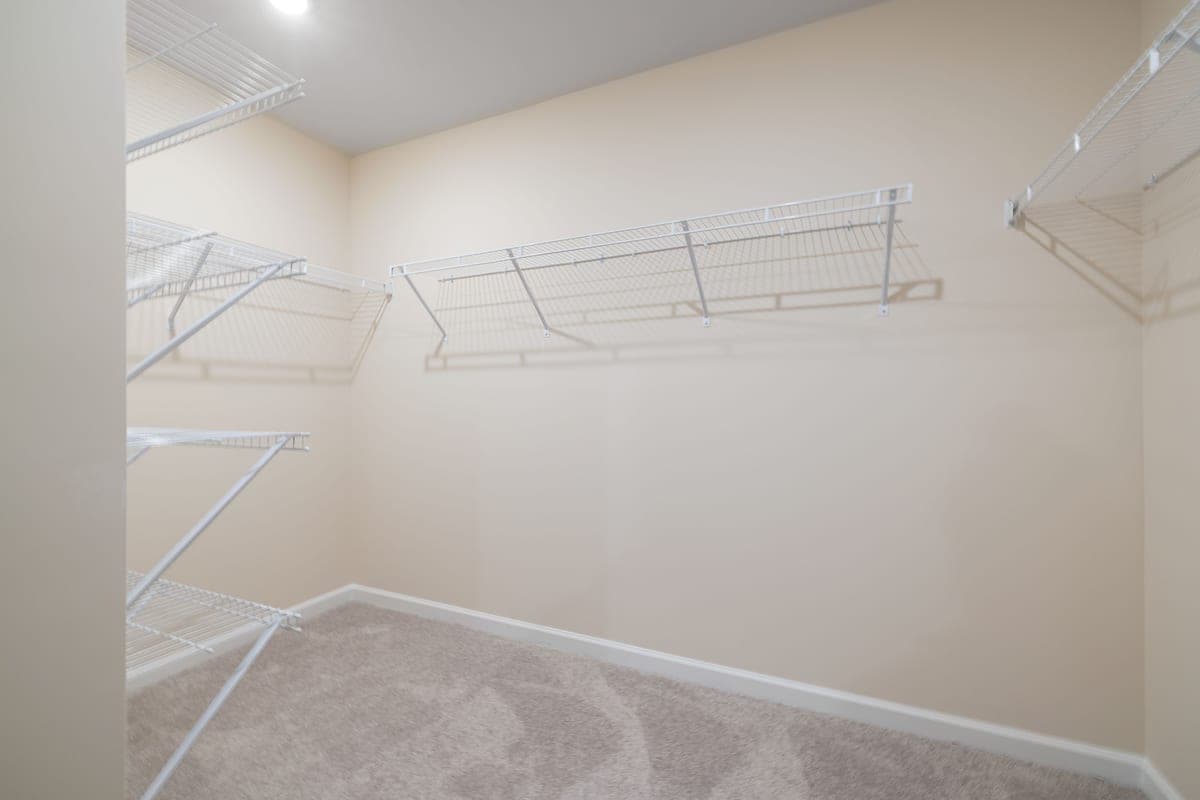
Every published closet-shelving load figure assumes the fixings reach studs, and most of them stop being true if they do not. ClosetMaid rates ShelfTrack at about 83 lb per bracket and up to 1,000 lb per system, but only with at least three screws into studs in the hang track and three in the middle standards. Rubbermaid rates a FastTrack rail at 1,750 lb, but requires it to begin and end on a stud, and states that maximum capacity is not achievable at 24 inch stud spacing. Elfa publishes 200 kg per section and up to 40 kg per shelf, and says studs are optional but increase capacity.
That single conditional is the most important thing on this page, and it is the thing no buying guide in this category mentions. A load rating is a statement about an installation, not about a product.
The published figures, side by side
| System | Published load | Stated condition | Source document |
|---|---|---|---|
| ClosetMaid ShelfTrack | About 83 lb per bracket; up to 1,000 lb per system | At least 3 screws into studs in the hang track and 3 in the middle standards. Standards no more than 24 in apart and no more than 4 in from the shelf end. | ClosetMaid ShelfTrack Installation Tips; Wire Shelving Specifications rev 6/12 |
| ClosetMaid Maximum Load | Up to 600 lb per 6 ft shelf | Same fixing requirements, heavier gauge shelf | ClosetMaid Wire Shelving Specifications rev 6/12 |
| Rubbermaid FastTrack rail | 1,750 lb for the rail | Rail must begin and end on a stud. A 48 in rail must hit 4 studs, an 84 in rail 6. Anchors every 8 in between studs. Maximum capacity is not achievable at 24 in stud spacing. | Rubbermaid FastTrack Rail and Shelving Installation Guide |
| Elfa Classic | 200 kg (about 440 lb) per section; up to 40 kg (about 88 lb) per wire or melamine shelf | Studs not required but increase capacity. Top-track holes are oval to improve the chance of catching one; a screw in every hole is recommended. | Elfa, Weight and security; Elfa installation instructions |
| Seville Classics UltraDurable freestanding | Up to 800 lb per shelf; up to 4,000 lb per unit | None — the unit is freestanding and does not use the wall at all | Seville Classics UltraDurable product specification |
Figures are quoted as the manufacturers publish them. We have not tested any of these systems and nothing here is a measured result.
Read that table again, then read this
The freestanding rack at the bottom of the table publishes a per-shelf figure roughly ten times the wall-mounted systems above it, and it has no conditions attached at all. That is not because it is a better product. It is because a freestanding rack transmits its load straight down through four posts into the floor, and a wall-mounted shelf transmits it into a few screws in some drywall.
If what you are storing is heavy and the wall is uncertain, the answer is a freestanding rack, not a stronger wall system. This is the most consequential thing on this page and it is why the pantry shelving roundup leads with a freestanding unit rather than a wall build.
Easy Track is the clearest example of a whole-system figure rather than a per-part one: it publishes up to 1,200 lb for an 8 ft closet, conditional on the rail being mounted into studs, and no per-shelf number at all. Why that is harder to plan against than Elfa's per-shelf figure is set out on Elfa vs Easy Track.
Bracket spacing, and what happens between brackets
ClosetMaid's own instruction is that standards sit no more than 24 inches apart and no more than 4 inches from the end of the shelf. Both halves matter. The 24 inch figure limits the unsupported span in the middle of the run. The 4 inch figure stops the shelf cantilevering past its last support, which is where a wire shelf bends first — you have almost certainly seen a closet shelf that droops at one end and is level everywhere else.
A wire shelf does not fail suddenly. It deflects, permanently, and the deflection accumulates over months of sustained load. By the time it is visible it does not come back. The practical rule that follows is to space brackets for the load you will eventually put there, not the load you are putting there today.
Closet rods are a span problem too
The rod is usually the first thing to sag, because it carries a genuinely heavy distributed load across a span nobody supports in the middle. ClosetMaid's guidance for its SuperSlide rod is one support every 36 inches of hang rod, plus one at each end of the shelf and rod.
That figure translates well to a generic rod. A six foot run with supports only at the ends has a 72 inch unsupported span, which is double what ClosetMaid asks for. Add a center support and each half is 36 inches, which is within it. If your rod has already bowed, replacing it with a steel one is only half the fix — see closet rods for the rod, and add the support.
Linen closets hit this more often than bedroom ones, because they are frequently narrow and built into a hallway partition rather than a framed stud wall. The freestanding options that need no studs at all are on best linen closet shelving.
If you are buying brackets rather than a complete system, the published pair ratings run from 300 lb to 1,000 lb and every one of them assumes a fixing most walls cannot give. Those figures are set against each other on best closet shelf brackets.
What to do when there are no studs where you need them
- Move the shelf. The cheapest fix by far. Shift the run a few inches so the standards land on studs. Adjustable systems make this easy; a fixed shelf kit does not.
- Use a hang track that spans several studs. This is precisely what ClosetMaid's hang track and Rubbermaid's rail are for: they turn point loads into a line load across whatever studs exist.
- Go freestanding. See the table above. A freestanding rack ignores the wall entirely and publishes a load figure an order of magnitude higher.
- Do not rely on drywall anchors for a load-bearing shelf. They have their own ratings, but none of the system figures in the table above apply once you are anchor-only, and the manufacturers say so.
The weakest point in a shelving run is not the middle of a span - it is the corner, where the longest edge is unsupported and the two walls are rarely square. ClosetMaid publishes 15 lb for its corner kit against the 83 lb per bracket above, and the rest of the category is on best corner closet shelves.
FAQ
Questions people ask about this
How much weight can a closet shelf hold?
It depends entirely on the fixings. ClosetMaid publishes about 83 lb per bracket and up to 1,000 lb per ShelfTrack system, but only with at least three screws into studs in the hang track and three in the middle standards. Without studs, the published figure does not apply.
How far apart should closet shelf brackets be?
ClosetMaid's own instruction is no more than 24 inches apart, and no more than 4 inches from the end of the shelf. The end figure matters as much as the spacing — a shelf cantilevering past its last bracket is where the droop starts.
What is the strongest closet shelving?
Of the systems whose figures we compiled, a freestanding NSF rack publishes the highest per-shelf load at up to 800 lb, with no stud condition attached, because it carries load through its posts into the floor rather than into the wall. Among wall-mounted systems, Rubbermaid publishes the highest rail rating at 1,750 lb, conditional on the rail beginning and ending on a stud.
How far apart should closet rod supports be?
ClosetMaid specifies one support every 36 inches of hang rod for SuperSlide, plus one at each end. A six-foot rod supported only at its ends has a 72 inch unsupported span, which is double that, and it is why so many closet rods bow.
Can you hang closet shelving without hitting studs?
You can hang it, but the manufacturers' published load ratings no longer apply. Rubbermaid states directly that maximum rated capacity is not achievable even at 24 inch stud spacing, let alone with no studs. If the wall will not cooperate, a freestanding rack is the honest answer.
Why does wire shelving sag?
Sustained load across too long an unsupported span, and cantilevering past the last bracket. It deflects gradually rather than failing suddenly, and once it has taken a set it does not come back. Space supports for the load you will eventually store, not today's.
Sources
Where these figures come from
- ClosetMaid, ShelfTrack Installation TipsStandard spacing, end clearance and the screw-into-stud requirement the load rating depends on.
- ClosetMaid, Wire Shelving Specifications (rev 6/12)Depth options, bracket and standard load figures for the ClosetMaid wire ranges.
- Rubbermaid, FastTrack Rail and Shelving Installation GuideRail load rating, stud-count requirement per rail length, and anchor spacing between studs.
- Elfa, Weight and securityPublished per-section and per-shelf load figures for the Classic range.
- Elfa installation instructions (The Container Store)Top-track fixing method and the oval screw-hole design.
- Seville Classics, UltraDurable NSF shelving specificationsPer-shelf and per-unit load ratings, size range and NSF certification.
- What is not a source hereWe have not handled these products. Nothing on this page is a test result, and no figure comes from a retailer listing, another publisher, or memory.